In high-stakes environments where every second counts, public sector professionals need absolute certainty in their tools and equipment. First responders rushing to an emergency, police officers securing evidence at a crime scene, or defense personnel managing mission-critical supplies all depend on having the right assets available at a moment’s notice.
Any delay or inefficiency compromises their ability to serve and protect communities. The challenge intensifies as public agencies face persistent talent shortages and increasing operational demands. Technology offers a powerful path forward, enabling teams to automate manual processes and gain complete awareness of their resources.
Mission readiness suffers when equipment goes missing or stays unserviced. Historically, legacy Land Mobile Radio (LMR) systems restricted field communication to voice-only channels. Modern high-speed broadband networks, such as FirstNet in the United States, act as a powerful catalyst for operational change.
Broadband networks provide the digital pipes necessary for real-time data synchronization across vast operational landscapes. This connectivity shift allows agencies to adopt advanced tracking tools, fundamentally altering how teams manage critical equipment.

High-Speed Networks Drive Real-Time Awareness
Managing vast inventories of essential gear presents persistent challenges for public safety organizations. Traditional methods involved labor-intensive paper logs and manual entry processes susceptible to human error. Such practices often created incomplete records regarding equipment locations and service histories.
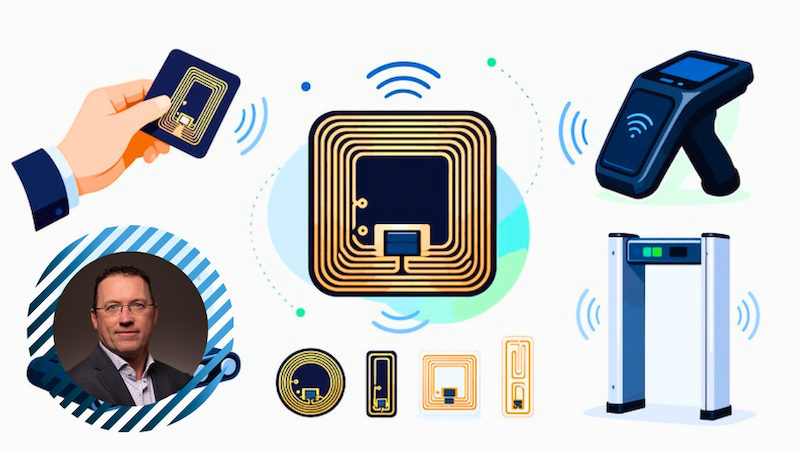
Moving beyond these archaic systems requires a robust technical foundation. RAIN RFID, coupled with edge computing, gives a unique digital voice to every physical asset. Unlike older barcodes necessitating direct line-of-sight scanning, RAIN RFID facilitates simultaneous identification of numerous items.
Fixed readers installed at station doorways or warehouse portals capture data instantly as tagged supplies pass through. Reliable networks then transmit this information without delay, building a dependable and indisputable inventory record.
Moving Beyond Manual Inventory Methods
Technological leaps provide a foundation for incredible efficiency within quartermaster operations. Routine equipment checks often consume valuable time that frontline workers could otherwise dedicate to training or community engagement. Manual inventory counts proceed slowly and drain limited human resources.
Handheld RFID readers automate this vital task completely. In North America, certain agencies replaced twenty-minute manual vehicle inspections with mobile scanners that accomplish the job in seconds. An officer simply walks around the vehicle while the reader automatically verifies every piece of equipment. From medical kits to tactical gear, the system confirms presence without needing to open every container. Firefighters gain confidence knowing they possess every necessary tool before leaving the station bay.
International examples further showcase the financial benefits of automating asset management. The Mid and West Wales Fire and Rescue Service in the United Kingdom utilized a system featuring fixed readers and mobile computers to optimize personal protective equipment distribution. That specific deployment saved the service more than £600,000 over the ten-year lifespan of the gear.
Another fire and rescue department in the United States saved approximately €3,350 monthly by achieving constant inventory visibility. Digital tracking also streamlines maintenance schedules. This automation guarantees that agencies replace expiring items punctually and service all tools properly. Safety increases when equipment functions exactly as expected during a crisis.
Precision in the Field through Digital Serialization
Beyond simple inventory counts, advanced location technology fortifies the integrity of evidence management. Success lies in serialization, where each asset receives a unique Electronic Product Code (EPC). This gives every piece of evidence a distinct digital license plate. Serialization creates an unbreakable, auditable trail from the initial collection point to the courtroom.
When an investigator logs an item at a crime scene, the system records its unique EPC immediately. As the item moves through the justice system, fixed RFID portals at each handoff point document its location, time, and current custodian. Automated chain-of-custody tracking removes the risk of human error. It prevents loss and provides a powerful safeguard against tampering.
Similar principles apply to the management of sensitive materials and controlled substances. Florida agencies established smart rooms utilizing fixed portals to automate narcotics auditing. These setups achieved 100% compliance while reducing carrying costs by half. Technology removes the burden of manual oversight, allowing officers to focus on their primary duties.
Effective data capture also empowers personnel operating far from headquarters. Spain’s national police force utilizes Zebra L10 rugged tablets within their vehicles to digitize field activities. Officers scan documents, check personal identifications, capture evidence, and access critical databases instantly.
Integration eliminates time-consuming trips back to the station. Imagine an investigator digitally logging evidence from an accident scene with every item tracked via a digital tag. Seamless information flow ensures interagency collaboration and vastly improves situational awareness.
Proven ROI through Automated Accountability
Public agencies currently face persistent talent shortages and increasing operational demands. Technology offers a path forward, enabling teams to automate manual processes and gain complete awareness of their resources.
The Get Things Done methodology suggests that the more one must track personally, the less one accomplishes. Unburdening frontline professionals from tedious manual tasks allows them to focus on mission-critical objectives. Modern location systems provide the necessary visibility to optimize resource allocation across entire departments.
Financial stewardship remains a top priority for public sector leaders. Automating inventory reduces the need for safety stock, which often leads to 50% lower carrying costs. Precise tracking prevents the over-ordering of supplies that might expire before use.
Furthermore, data-driven insights allow agencies to justify budget requests with hard evidence of equipment utilization and needs. Accountability extends to the community, as citizens expect their tax dollars to support efficient and ready emergency services. RFID provides the transparency required to meet these expectations.
Future-Proofing Public Safety Operations
Governments and public organizations continuously confront sophisticated threats alongside growing operational pressures. The demand for robust, secure, and interoperable systems grows daily. Adopting resilient technologies creates data-powered environments where every worker and workflow connects seamlessly.
The public sector’s migration toward Zero Trust security models underscores the necessity of dependable infrastructure. Meeting standards like Commercial Solutions for Classified (CSfC) standards ensures that agencies protect sensitive data while maintaining high-speed connectivity.
Advanced location technologies have proven their value across numerous sectors worldwide. With 55 billion items tagged annually, this technical foundation plays an expanding role in shaping intelligent operations. Public agencies hold the key to unlocking extraordinary efficiency and accountability.
By embracing these innovative tools, departments unburden professionals from tedious tasks and empower them with accurate information. Empowered frontline teams ultimately build a safer, highly responsive future for everyone they serve. Progress depends on our ability to integrate these sensors and networks into a cohesive operational picture.
We focus on what possibilities exist when technology supports the human element of public service. Precise visibility ensures that when the call comes, every professional stands ready with the right tools to save lives.
 Brent Brown, Vice President and General Manager of the Advanced Location Technologies (ALT) Business Unit at Zebra Technologies, is a seasoned retail executive with over 30 years of experience in the technology industry. Brent oversees software and hardware engineering as well as go-to-market strategies, focusing on active and passive RFID technologies across various industries. His career includes leadership roles at Tandem, Compaq, Hewlett Packard, and Sensormatic, where he gained extensive expertise in sales, business development, and engineering. A passionate advocate for delivering value through innovative technology, Brent has worked with major clients across North America, Europe, and Asia. Residing in Toronto, Canada, with his family, Brent enjoys sports like hockey, golf, and volleyball.