
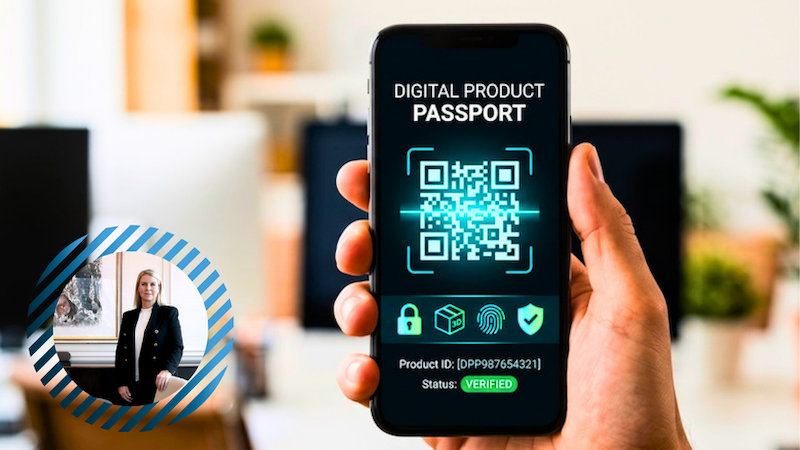
Ask most brands and retailers what a Digital Product Passport (DPP) is for, and the conversation will usually begin with compliance. A regulator sets a deadline, legal highlights the risk, and shortly afterwards, a project gets underway.
But DPP is not something a single function can own and simply check off a list. It cuts across product data, sourcing, operations, sustainability, marketing and customer engagement – and in doing so, it often exposes just how fragmented a company’s underlying data really is.
For anyone working with item-level identification, that challenge should feel familiar. It is the same fragmentation problem that RFID has quietly been addressing at the physical layer for years.
What Does the ESPR Require From Digital Product Passports?
The regulatory push behind all this is real. The Ecodesign for Sustainable Products Regulation (ESPR), entered into force in July 2024, and its requirements are now moving from framework into implementation. Large textile and footwear companies are already facing a ban on destroying unsold goods, with further product categories expected to follow over time. The technical scaffolding, including an EU registry for DPP data and the standards defining how passports actually work, is being built out in parallel. You can read more about the regulation directly from the European Commission.

What is easy to miss in all of this is that DPP is not one single technology or one single identifier. Depending on the requirement and use case, product information may exist at model, batch or individual item level. While access to a Digital Product Passport will typically be enabled through a consumer-facing data carrier such as a QR code or NFC, technologies including RFID can play an important role in establishing, validating and maintaining the trusted product identities and data that underpin the passport.
Why Is Data Reusability the Real Value of a Digital Product Passport?
The real promise of DPP is not disclosure, but data reusability. When product information can be trusted, verified and consistently linked to a product identity, it no longer serves a single regulatory purpose. The same trusted record can support compliance, sustainability reporting, resale, repair, warranty management, consumer engagement and operational decision-making without requiring the data to be recreated each time.
The question is not just what information companies need to disclose. It is how that same information can be put to work across the business once it is trusted, connected and easy to access.
The value lies not in the passport itself, but in creating a reliable product record that can support both today’s requirements and tomorrow’s opportunities.
Unsold goods are a useful example of what is at stake. The European Environment Agency estimates that between 4 and 9 percent of textiles placed on the EU market are destroyed before they are ever worn, a figure detailed in the agency’s own research briefing. Better visibility into what is sitting unsold, where it is, and what it is made of can help route product toward resale or donation before it becomes a write off. That only works, though, if the underlying information is reliable enough to act on with confidence.
How Does Item-Level Identification Make DPP Data Trustworthy?
This is where item level identification does most of the heavy lifting. A passport is only ever as reliable as the data feeding it, and a large share of that data is generated long before a brand even sees the finished product, back at the manufacturing and supply chain stage. Shipment mismatches, stock that cannot be accounted for, and product claims that cannot be verified almost always trace back further up the chain than where the problem first surfaces.
Technologies that validate products and shipments before they leave the factory, including item level tagging and RFID reads at key checkpoints, are what establish a trustworthy link between a physical item, its digital identity and the information associated with it. Weaken that first link, and everything built on top of it inherits the same weakness, no matter how much software sits above it.
As more products carry structured digital identities, the questions brands can ask start to change in meaningful ways. Which materials or suppliers correlate with higher return rates? Which products hold their value best in resale? Which sustainability claims can actually be backed up with data rather than assertion?
That is the shift from simply tracking products to genuinely understanding them, and artificial intelligence will likely accelerate that shift considerably. It can only do so, however, where the underlying identification and data are sound to begin with, since AI does not fix fragmented or unverified data. It just amplifies whatever foundation it is given to work with.
Where Should Companies Start With Digital Product Passports?
DPP is complicated enough without trying to solve every future use case all at once. A more practical approach is to start with what is actually required, understand where the data originates, confirm whether it can be trusted at the item level, and build an architecture able to absorb more detail as regulation and business needs continue to evolve.
No single department can own this alone. Legal and sustainability teams interpret the requirements, IT connects the systems, sourcing and manufacturing partners generate the underlying product data, and commercial teams are ultimately the ones putting that connected data to use with customers.
Compliance may be what drives many DPP initiatives, but the lasting value comes from the trusted product intelligence behind the passport, intelligence that can be reused across the business for years to come.
For companies already investing in item-level identification and RFID infrastructure, DPP should be seen less as a new project and more as a natural extension of trusted product identity. It is confirmation that the trusted identity work already underway is exactly the foundation the next wave of regulation, and the next wave of product intelligence, will depend on.
 Nanna Ingemann Dalsgaard is Vice President – Strategic Intelligence and a member of the Executive Leadership Team at SML Group, a global, PE-backed manufacturing group with 4,000+ employees operating across Asia. With more than 25 years of international leadership experience across Europe, Asia, the US and the Middle East, Nanna works at the intersection of strategy, commercial transformation, digital innovation, and sustainability. Her executive mandate spans Strategic Intelligence, Digital Product Passport commercialisation, ESG integration, Marketing, corporate communication and positioning, and global transformation. Today, she is particularly focused on Strategic Intelligence and how Digital Product Passports, AI, trusted product data and emerging regulation are reshaping global value chains, and how businesses can turn that complexity into competitive advantage.