
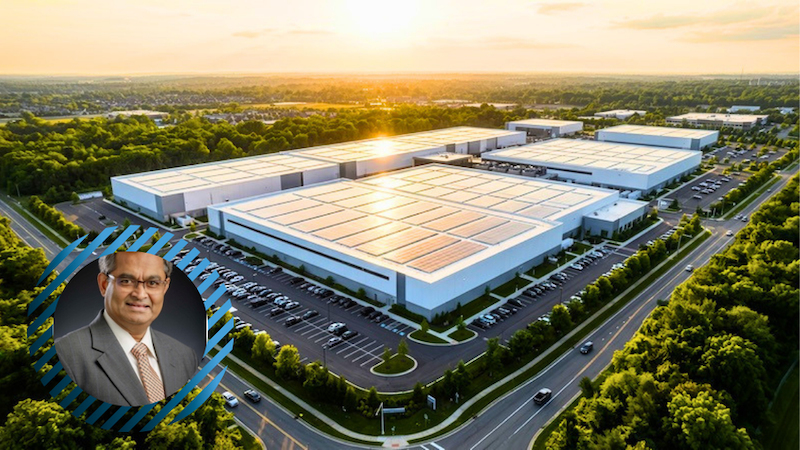
The artificial intelligence (AI) boom has ignited the demand for data centers. Goldman Sachs predicts a doubling of the power demand to run the data centers in just two years.
Generative AI tools such as ChatGPT, Gemini, and Preplexity require a significant amount of computing power to train large language models so they are able to answer user queries coming from the average person who is doing a search about basketball game statistics to investment bankers who are looking for nuggets of information that will help them invest in high return stocks.
Cloud computing, edge computing, the ubiquity of Internet of Things (IoT) proliferated among millions of smart devices, driverless cars that must process vast amounts of data using neural network models to make real time decisions via complex analytical models have all contributed to the surging demand for data processing infrastructure.
What Are the Biggest Barriers to Building Data Centers?
Although the need for data centers is evident, there are many barriers towards constructing and commissioning them. First, the data centers require a significant amount of energy. A hyperscale data center is a large building with several thousand computer servers, data storage devices, and networking systems occupying more than 10,000 feet of space, employing about 50 staff members, and consuming 100 megawatts of power, an amount consumed by 80,000 households in the US.

Second, in addition to the need for vast amounts of electricity, a data center requires millions of gallons of water per day for cooling the computing, storage, and networking equipment. Third, the lead time and the cost to build data centers is not insignificant. In addition to permitting and supply chain challenges that must be overcome, construction of a data center requires a significant amount of investment. Fourth, because a data center requires vast number of resources, employs only a few people while occupying large parcels of land and contributes to noise pollution, many communities as well as local and state governments are opposed to erecting data centers in their backyard.
How Can We Build Data Centers Faster and Cheaper?
While it takes two years to build a data center, technology companies need them built much faster. One way of constructing data centers quickly is to utilize modular buildings with prefabricated walls. This can cut down the construction lead time by 25 percent or more.
Utilizing abandoned buildings as data centers can also speed up construction. In addition, companies can look for locations where energy is available in abundance and at a favorable rate. The could also build their own power. For example, Google purchased a wind and solar developer so they could build power plants adjacent to the data centers. Utilizing batteries to store energy, drawing electricity from the grid during off peak hours, storing it in batteries, and then using the saved energy during peak hours can also help balance the load on grids while reducing the energy cost to the user.
Potential long-term solutions include building data centers in space using AI satellites. These data centers can use solar arrays for their energy needs, have a smaller footprint, utilize fewer antennas, and can produce sufficient energy to run a data center in space. Of course, this technology has not been fully tested, but I believe it is a matter of time before we utilize space for a variety of purposes including construction of data centers.
How Should the U.S. Plan for Future Data Processing Demand?
What needs to be done next? The demand for data processing infrastructure has caught many off-guard. How do we plan for data processing capability in the near-term, medium-term, and long-term? How do we meet that demand in a timely manner and at a low cost? What can universities, companies, and governments do to facilitate the data processing capability that is going to be required in the future?
This demand is going to be exponential, especially as the AI models take off to the next level. Perhaps, a revolution in the technology can reduce the demand for data processing and computing technology. Regardless, rather than react to changes in the data processing world (which is what we are doing currently), I believe it is imperative that we proactively plan for understanding the data processing needs and developing the necessary infrastructure so the US can continue to be a leader in this field when other countries are challenging our leadership position.
This will require partnerships with companies and countries from around the world.
Offering a Road Map
I believe a starting point could be a quasi-government organization that brings together a representative set of relevant experts in academia, industry, government as well as users of AI models to estimate the demand for data processing capability in the next two, five, and ten years. A plan must then be charted out to determine the software, hardware, and resource needs during this period of time while simultaneously developing the human talent that will be required to further develop data processing capabilities and build the infrastructure that will be required by the next generation of AI tools.
There is no silver bullet for solving the data computing infrastructure problem that is in front of us, but we must begin an organized way of addressing this challenge that has a significant impact on IoT developers and users.