
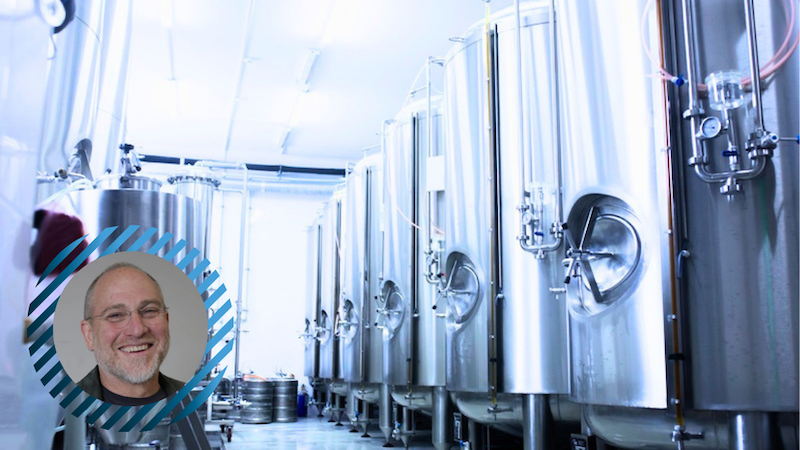
Beverage producers have modernized nearly everything, except the part that matters most.
Supply chains got smarter. Packaging became more sophisticated. Distribution connected itself to real-time logistics networks. But inside the fermentation vessel, where the actual product is born, producers have largely been flying blind, piecing together what’s happening from periodic samples, lab results taken hours earlier, and manual observations that capture only a frozen moment in a wildly dynamic process.
That era is ending.
The Black Box Is Open
Fermentation is one of the most complex biochemical processes in manufacturing. Temperature shifts, microbial activity, dissolved gases, pH swings, dozens of variables interact continuously, and small deviations cascade into real consequences: off-flavors, inconsistent yields, wasted batches, and eroded margins.

For years, producers accepted this complexity as unknowable in real time. They worked in snapshots. They reacted after the fact.
Smart sensors are changing that entirely. Today’s cloud-connected sensor architectures don’t just measure, they think. They capture multiple operational parameters simultaneously, process signals at the edge of the process itself, and pipe interpreted data through cloud analytics layers that turn raw readings into actionable intelligence. Operators no longer ask what happened. They ask what’s happening right now and they get an answer.
This is the dawn of fermentation intelligence. And it’s unlocking patterns that have been invisible since the industry’s beginning.
Data Isn’t the Win, Intelligence Is
The industry spent years chasing data, but more data without better interpretation just creates more noise. The shift happening now is from measurement to meaning. The producers extracting the most value from technology investments aren’t collecting more. they’re understanding more. Cloud-connected platforms can now surface the patterns buried in biochemical complexity, identify what’s driving variability, and deliver specific recommendations rather than raw numbers. The goal isn’t a better dashboard. The goal is clarity. The kind that lets an operator make a confident decision in minutes rather than waiting hours for lab confirmation.
Leveling the Playing Field
Not long ago, this level of process sophistication was reserved for the largest producers. The ones with deep budgets and dedicated engineering teams. Smaller and mid-sized producers watched from the sidelines.
That advantage has collapsed. Falling sensor costs, accessible cloud computing, and purpose-built analytics platforms now put enterprise-grade fermentation intelligence within reach of any producer willing to pursue it. The craft brewery with three tanks and a small production team can now operate with the same process visibility as a facility producing millions of barrels.
This matters enormously for the industry’s creative engine. The most inventive, boundary-pushing beverages in the market come from smaller producers. Giving those producers real-time visibility into their fermentation processes doesn’t just improve their operations, it raises the ceiling for what they can make.
What’s Coming
The convergence of smart sensors, industrial IoT, real-time analytics, and AI is still accelerating. The beverage production environments of the near future won’t just react to problems, they’ll anticipate them, adapt in real time, and continuously optimize across quality, yield, and efficiency simultaneously. These capabilities are starting to extend into other fermentation-based industries such as biofuel, alternative protein and even pharmaceuticals.
The producers who move first, replacing snapshots with continuous intelligence, will enter that future with a meaningful advantage. They’ll know their processes more deeply, respond more quickly, and produce more consistently than competitors still waiting on lab results.