Northern Westchester Hospital (NWH) has launched a passive ultrahigh-frequency (UHF) RFID-based solution to identify where its assets are located within zones, thereby enabling it to improve efficiency and patient satisfaction. The technology, provided by Quake Global, allows the hospital to locate clean equipment or other assets within a particular zone or room in real time, and to use related analytics to improve processes.
NWH is a non-profit, 245-bed acute-care facility in Mount Kisco, N.Y. The hospital is a member of Northwell Health. It comprises 21 hospitals and more than 550 outpatient facilities, and employs 61,000 people.
Before piloting and then launching the RFID system, NWH already had a unique set of business processes in place, as well as an interest in innovation. “This is a process-driven hospital,” says David Stotland, NWH’s director of biomedical engineering. “We’re a surgically sophisticated and technologically advanced organization with a focus on patient and family engagement.” Stotland came to the hospital in 2012 to help drive that technological effort, with a primary goal of patient satisfaction. “That is goal number one for us. It’s the driving point for all our initiatives.” He brought a background in electronics and telecommunication research, design and management, and had served as the biomedical engineering manager at Lenox Hill Hospital, where he provided support and development of clinical equipment.
Rather than having traditional clean and dirty rooms for equipment that is used by patients, and is then cleaned and made available again, the hospital already had its own operational management system. The Environmental Services team is notified when a patient is discharged, so that they can clean equipment directly in the patient room as part of the room-readiness checklist, and then place those cleaned items in an equipment-holding area on each floor, ready for reuse. Before the RFID pilot, the hospital’s Nursing and Biomedical groups had established PAR levels for patient pods. Each pod consists of approximately 15 patient rooms and has a specific number of assets assigned to it, such as vital-sign monitors, EKG machines, infusion pumps, lifters and scanners.


The hospital, however, wanted a technological system that would provide automated data about the location of equipment, compliance with PAR levels, and analytics to observe trends. “It has been determined that we didn’t need an active real-time locating system (RTLS) that would require maintenance itself,” Stotland adds, “because we didn’t need to control every square foot of the facility. But we did need to be better able to locate equipment when needed. Biomedical’s idea has been to monitor pre-defined areas.” Northern Westchester Hospital took advantage of its existing processes, used the existing pod-location system and created additional zones, such as the elevator areas, clean storage, the main depot, the biomedical area, and so forth, in order to gain visibility into where equipment is.
NWH investigated multiple passive RFID vendors, Stotland says, then selected Quake since it demonstrated an understanding of the hospital’s existing processes and was willing to build a solution around them. “We were not interested in just seeing our equipment on the electronic map,” Stotland explains. “We instead wanted to use equipment tracking data to optimize and develop related business processes, and asked Quake Global to configure a system for our needs and parameters.”
Quake provides a variety of hardware and software products for asset monitoring, process optimization and automation, explains Chetan Karani, Quake Global’s senior VP of solutions and sales engineering. “The customer can choose to use just a single product from Quake Global or a complete integrated solution. The products are configurable, creating cost-effective solutions specific to the needs of customers.”
“Quake’s EasyTAP software serves as a location engine and middleware layer,” Karani adds. “It captures data from a variety of RFID hardware and sends location information to IAM (Intelligent Assess Management) or any management software chosen by the customer.”
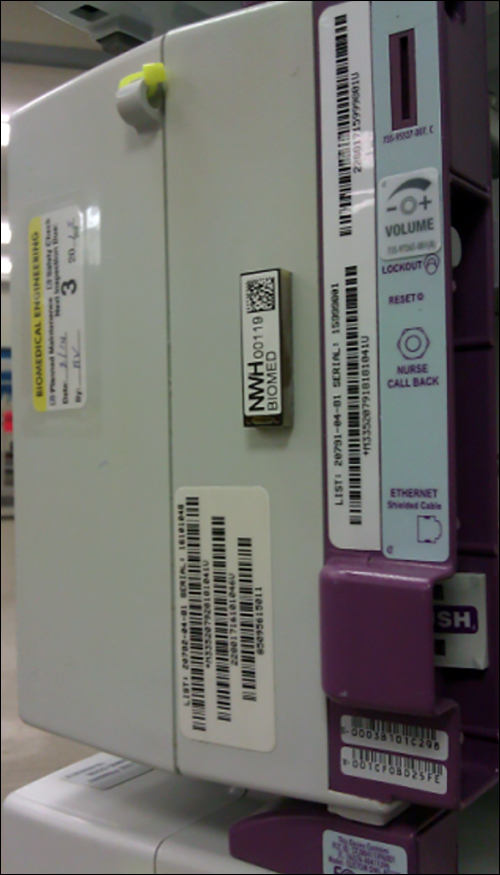
In 2016, the RFID system was installed on four patient floors and a ground floor at NWH, and the hospital applied RFID tags to a variety of piloted equipment. Quake’s Power-over-Ethernet (POE) Perch readers were installed throughout the facility. After tuning and adjustments, the technology being piloted enabled the hospital to obtain visibility of its equipment with 95 to 100 percent accuracy, confirmed by manual audits.
“Since then,” Stotland reports, “NWH has expanded the RFID reader deployment to all eight floors, and has tagged hundreds of movable assets.”
The solution, Karani says, “is a true marriage between process and technology.”

When a patient is discharged from the hospital, operation-management personnel are automatically notified by the hospital’s software, indicating that the room in which that patient was treated is now available for cleaning. Environmental Services workers then proceed to that location. After they have cleaned the equipment, they move it to the clean-storage area, passing RFID readers as they do, so that the devices can capture each tag’s unique ID number and forward that information to Quake’s software. Authorized users of the technology can then view equipment locations, and know whether a particular item has been moved to another floor, is in use or is available for reuse, based on its location. Instant logistical decisions are accordingly made by NWH’s operational management.
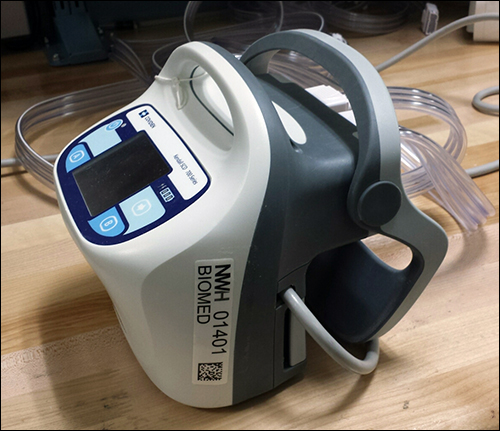
Thus far, tags are being applied to equipment such as telemetry transmitters; vital-signs monitors; wheelchairs; infusion, PCA and sequential pumps; bladder scanners; lifters; EKG machines; moveable computers; and printers, as well as to food trays. The hospital can track when food leaves the kitchen and is delivered to holding areas and then to patients. RFID technology has helped to provide objective timestamps showing response times and potential process gaps.
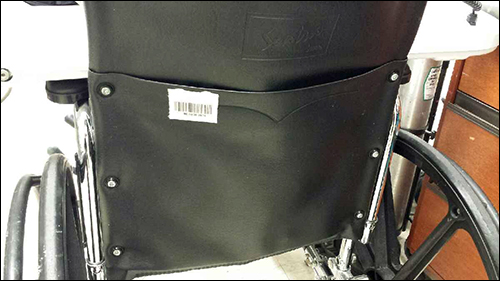
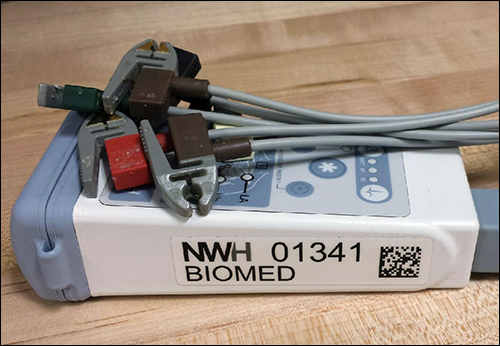
“The selection of appropriate tags required some biomedical experimentation,” Stotland reports. The hospital initially intended to use a single universal RFID tag, recommended by Quake, that could be applied to all assets, but found that some tags worked better than others on specific items. The facility is now using one rigid tag for flat surfaces, a flexible adhesive washable tag for curved surfaces, and a fabric tag that can be stitched directly into an asset, such as a wheelchair. The tags selected and tested by NWH have also been validated in Quake’s lab, Stotland says.
The Quake software captures, interprets and filters data. “RFID creates a lot of chatter,” Karani explains. “We’re filtering out the chatter” with a software layer that forwards only relevant data to the hospital’s existing software. Quake’s software provides reports about current and previous locations of assets, movement history, and equipment dwelling times.
To simplify daily reporting and the RFID system’s use by operational management, NWH has designed its own dynamic 60-second-self-refreshing reports about PAR levels, the incorrect assignments of tagged items (such as assets congregating on the wrong floor), and the dwelling times of equipment being repaired.
“Our initial goals to validate RFID sensitivity on medical equipment, to reliably trace equipment flows, to create notifications and integrate that tracking data into NWH’s environmental-readiness process have been achieved,” Stotland says. “In addition, we used RFID data to quickly find movable equipment for biomedical inspections, as well as for some internal investigations.” The next step, he adds, is to identify how the technology can be used to optimize other business processes.

Although the hospital is still evaluating the pilot’s results, Stotland says, “Subjectively, reports from health-care providers indicating they couldn’t immediately find the equipment they needed have stopped.” In addition, the hospital can use the RFID analytics to improve cost-efficiency and reduce waste by helping validate whether or not the amount of existing equipment is sufficient, and whether new equipment needs to be purchased. It can also prevent over-purchasing of assets that are already onsite but couldn’t be located by employees when needed.
The hospital teams are currently in discussions regarding the next potential phase for the technology, such as using RFID tags and readers to optimize processes in operating rooms, and to provide communications with patient families about their loved ones. “This is a great example of how hospital executive management, clinical engineering, IT and clinical teams can come together to reduce the costs of hospital operations and improve patient care,” says Polina Braunstein, Quake Global’s CEO.
“Health-care professionals from other hospitals are now showing interest in viewing the RFID technology in use at Northern Westchester Hospital,” Stotland adds.