
Smart Tags Meet Smart People: Why 2026 Will Belong to Wearables
After a few decades in manufacturing, you start to notice a pattern. Every few years, someone declares that a single technology is about to “change everything.” Most of the time, it changes a few things, makes some meetings longer, and leaves us with a closet full of outdated cables.
RFID was different. It came quietly and stayed. For years, it has been the dependable foundation of traceability with tagging, tracking, and telling us where our stuff actually is when spreadsheets fail us. Now, it’s entering a new phase. In 2026, RFID’s next big partnership isn’t with robots or drones like predicted in some 1960s Twilight Zone episode, it’s with us. Specifically, with the wearables we’ll be strapping, clipping, or slipping on before our morning coffee.
Before anyone rolls their eyes, no, this isn’t about turning factory workers into walking QR codes. It’s about giving them tools that make their jobs safer, easier, and less paperwork heavy.
RFID’s Steady Hand
RFID has earned its reputation the old-fashioned way, by serving problems and not complaining about it. It quietly built the foundation for modern supply chain visibility. As the FDA’s Food Safety Modernization Act (FSMA) ushers in new traceability requirements, calling for detailed Key Data Elements for every Critical Tracking Event, RFID is already positioned to help manufacturers comply.

Those who have worked with it know its value of accurate, automatic recordkeeping that doesn’t depend on someone remembering to jot something down at the end of a long shift. RFID tags don’t get tired. They just work. But the human element has always been one missing piece. RFID can tell us where a pallet is, but not necessarily what’s happening around it, or who’s moving it. That’s where wearables change the game.
The Human Layer of Digital Transformation
For a while, the industry was obsessed with connecting machines. We called it “Industry 4.0,” and it was all about sensors, predictive maintenance, and machines that talked to each other (sometimes more effectively than departments did). But as we move into 2026, the focus is coming full circle back to people.
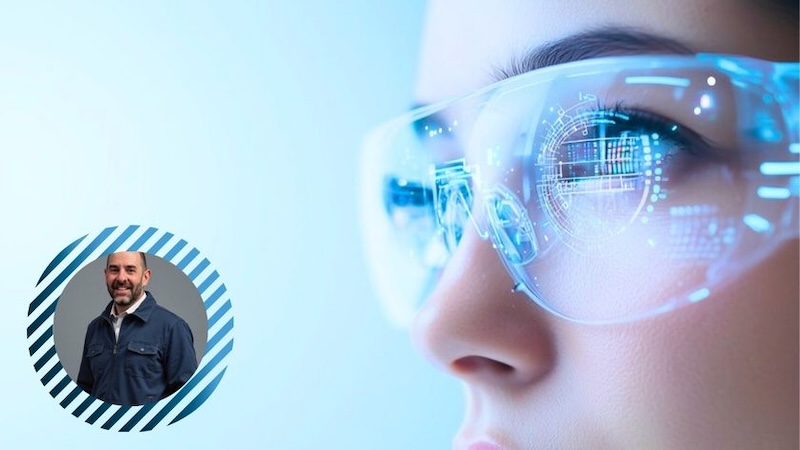
Wearable technology like smart glasses, connected gloves, RFID badges, and sensor-enabled helmets, is bridging that gap. These gadgets are practical extensions of RFID’s reliability, giving workers real-time information and safety cues right when they need them.
Picture a line operator getting a gentle buzz on their wristband because a component just failed an RFID validation check, or a technician seeing an overlay in their glasses showing the last maintenance log for the machine they’re inspecting. That’s the natural next step in data-driven manufacturing, not a chapter from a Ray Bradbury novel, but it’s understandable to have that confusion with such powerful technology. And fortunately, unlike a lot of “digital transformations,” this one doesn’t require an inspirational offsite or an acronym-filled PowerPoint deck. It just works in the flow of daily operations.
Safety First, Efficiency a Close Second
Wearables are also reshaping how we think about safety. RFID-enabled badges can warn when a worker steps too close to moving equipment. Smart helmets can sense excessive heat before anyone else feels it. Some systems even track repetitive motions to reduce strain, something every veteran of the shop floor can appreciate after a long week.
Safety improvements like these don’t need dramatic rollouts. They quietly build trust. Workers notice that technology isn’t there to monitor them, but it’s there to protect them. When safety becomes seamless, efficiency follows. Because let’s be honest, people don’t come to work dreaming about filling out compliance logs. If RFID and wearables can take care of that automatically, we free up time for what really matters like keeping the lines running and the coffee fresh.
Regulatory Readiness Without the Panic
The FSMA Final Rule’s compliance date, currently slated for January 2026 (and possibly extended to 2028), has a lot of companies double checking their data systems. For those already using RFID, the good news is they’re halfway there. Adding wearable integration can close the loop by capturing who handled what, when, and where, automatically.
It’s worth remembering that compliance deadlines are about confidence. Being able to respond to an FDA inquiry in hours instead of days is both a regulatory win and an operational peace of mind. And when your records are automatically generated at the point of action, there’s a lot less to lose sleep over.
Besides, the last time we all scrambled to meet a new compliance rule, we swore we’d never do that again. Maybe this time, we can make good on that promise.
Turning Data Into Understanding
Collecting data is easy, but turning it into something meaningful is harder. That’s where the real opportunity lies in 2026. The next evolution of RFID and wearables is about interpreting every motion in context. Dashboards that show where workers spend the most time can highlight bottlenecks. Fatigue sensors can inform scheduling. Even basic proximity data can identify workflow inefficiencies that we’ve simply accepted for years.
The goal is seeing and improving operational insight. If a team is constantly stopping to scan labels manually, maybe the process needs a rethink. That’s the kind of quiet intelligence that moves the needle, one small adjustment at a time.
The Future Belongs to the Connected Worker
This year, expect wearables to take their place alongside RFID as a quite revolutionary of modern manufacturing. They won’t arrive with fanfare or sweeping promises. Instead, they’ll prove themselves through steady gains like fewer errors, faster responses, and safer days. The most effective technologies rarely shout. They listen, they adapt, and they make work simpler, safer, and smarter without demanding constant attention.
Manufacturing has always been about balance, the yin and yang between people and processes, between innovation and stability. As the next wave of transformation approaches, that balance remains the compass. For those who have been in the industry long enough, it’s obvious that progress doesn’t have to be loud to be powerful. And if we can do that while cutting down on paperwork, that’s the kind of innovation everyone can get behind.