
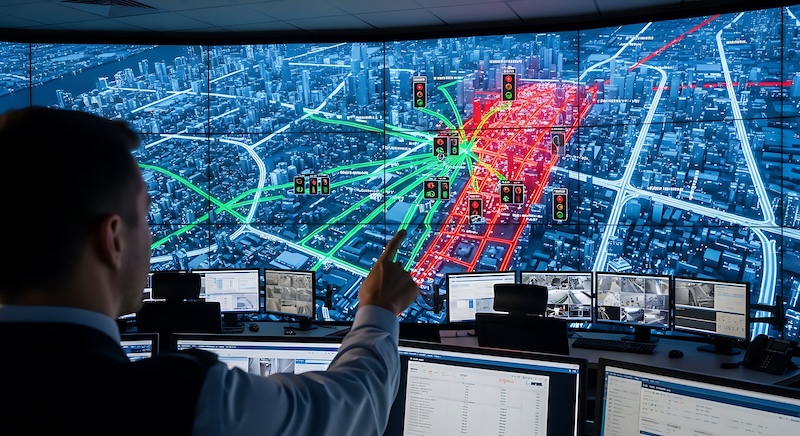
Urban traffic creates congestion, wasted time and excess emissions that also complicate public transit schedules and emergency response. Smart cities address the issue by treating streets as adaptive systems. They gather live data from roadside infrastructure and city platforms, then act on their findings through signal timing, pricing and operations. RFID fits neatly into that model because it quickly and consistently identifies vehicles at the edge, where decisions often need to be made in seconds.
City planners are preparing for long-run growth that will strain road and curb space. Experts project that 70% of people worldwide will live in urban areas by 2050, turning traffic management into a capacity problem as much as a convenience feature. In that environment, transport systems need automation that scales.
RFID helps by producing dependable identity events that software can translate into pricing, enforcement priority and performance analytics without requiring human intervention at every decision point.
How RFID Technology Streamlines Urban Mobility
In a smart traffic deployment, an RFID system still comes down to a tag, a reader, an antenna and software, but the workflow is tuned for high-speed movement.

A tagged vehicle passes a reader mounted at a gantry curb entrance or depot gate. The antenna captures the tag’s identification and the reader forwards that event to a management platform where business rules connect identity to actions, such as opening a barrier, logging a timestamp or updating an account.
Because reads are fast, RFID turns physical movement into structured data. This data becomes even more valuable when it is combined with other inputs, such as video analytics and Bluetooth travel-time sensing. RFID provides high-confidence identity, so analytics pipelines can separate local buses from private vehicles, distinguish permitted delivery vans from general traffic and validate other sensor detections when conditions get messy.
Key Applications of RFID in Traffic Management
RFID supports traffic operations best when deployed at decision checkpoints, or places where vehicles must enter, exit, stop or be counted. Four applications show how cities use those touchpoints to increase compliance and feed better automation upstream.
1. Automated Toll and Congestion Charge Collection. Electronic tolling replaces stop-and-go payment with drive-through identification and billing. Agencies moving toward free-flow tolling emphasize gantry-based collection that allows vehicles to maintain highway speeds while the system identifies the vehicle and processes the transaction. This reduces queues and enables safer roadway operations during peak times.
RFID also enables congestion charging designs in which the pricing logic depends on entry events. Cities can assign different billing rules based on vehicle type, residency status or emissions class.
2. Intelligent Parking. RFID tags on vehicles can identify authorized users at garage entrances and permit-only zones. When readers are also present at key internal chokepoints, the system can maintain near-real-time occupancy counts and feed guidance to signs or apps, so drivers spend less time circling.
Operations enjoy the most significant benefit. RFID events help cities measure turnover, detect repeat overstays and evaluate policy changes. Those analytics work best when RFID data is fused with payment records and curb regulations, so the city can see which blocks absorb demand and which rules actually change behavior.
3. Dynamic Traffic Signal Control. RFID readers placed upstream of intersections can register tagged fleets, such as buses, snowplows, waste trucks and emergency vehicles, then publish arrival events to the traffic management system. Depending on the situation, the controller can then extend green times or trigger a priority plan for a specific corridor.
RFID also validates what other sensors infer. Video and radar estimate queues and turning movement counts, but identity-based reads can confirm that a detected vehicle is a bus running late or an emergency responder.
4. Efficient Public Transport Management. Public transit agencies use RFID for depot automation and fleet visibility. Readers at depot gates can automate check-in and checkout, so dispatch software knows which vehicles left on time and which stayed in maintenance. Similar reads at terminals can timestamp movements, giving operations teams a clear picture of headways and layover compliance.
When a bus enters a yard, RFID identity can pull its service history and trigger inspections linked to time-in-service or mileage. When that data is integrated with predictive models, agencies can schedule work based on actual usage rather than calendar estimates.
Building a Reliable Data Backbone for Citywide RFID
RFID produces lots of small events, but city deployments generate them everywhere at once. The hardest failures often come from bottlenecks in ingestion, storage and analytics, rather than from the readers themselves. Edge processing helps because it filters events, applies basic validation and keeps local operations running during network disruptions.
City traffic teams also manage mixed sensor stacks when RFID is used alongside video. Storage design problems appear quickly in video systems when the backend cannot keep up, leading to latency and dropped frames. Many smart city deployments address this by processing and recording at the edge with AI-capable network video recorders, then pushing selected data to centralized systems, including backends built around IP-SAN servers.
When cities adopt this approach, RFID becomes a reliable identity stream that enables real-time corridor operations and feeds AI models that forecast congestion. Traffic control can be unforgiving, so cities need technologies with predictable performance and proven security models. RFID already meets that bar in other high-consequence environments — research shows that 68% of supply chain leaders intend to invest in RFID-related data foundations for automation and AI projects in 2026.
The Future of Smoother and Smarter Urban Journeys
RFID helps cities turn movement into actionable data. As urban growth accelerates, the value shifts from isolated deployments to connected systems that share events with analytics and AI. Edge processing and scalable backend infrastructure keep those events reliable at city scale, while enabling video and other high-volume sensors.
With that foundation, smart cities can manage traffic with faster feedback loops and more predictable outcomes for daily travel.