RFID’s Achilles Heel
Concerns about companies abusing RFID technology to spy on customers threaten to prevent consumers from realizing many of the benefits of the technology.

Concerns about companies abusing RFID technology to spy on customers threaten to prevent consumers from realizing many of the benefits of the technology.
Concerns about companies abusing RFID technology to spy on customers threaten to prevent consumers from realizing many of the benefits of the technology.

GS1 Canada, Wal-Mart Canada, Shoppers Drug Mart and other firms in Canada will examine public policy specific to RFID technology, and provide recommendations to foster the technology’s adoption.

The latest offering from W5 Networks reduces system costs to $3.50 apiece for electronic shelf labels.
In the next few days, RFID solutions provider ODIN technologies will announce the completion of the first of two phases in its RFID infrastructure deployment for the US Department of Defense.
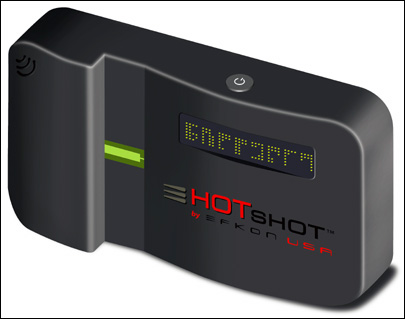
Based on RFID and IR technology, the device aims to help ensure that drivers pay their fare share when using high-occupancy toll lanes.

Andrew Nathanson, of the market research firm Venture Development Corp., says the pharmaceutical industry will increasingly adopt hybrid HF-UHF RFID solutions over the next five years, followed by near-field UHF technology.
Last week RFID Update attended the 2006 RFID Conference, hosted by investment firm Robert W. Baird & Co. The one-day event catered to the investor community, which was reflected by presentations that tackled high-level topics like Gen2 performance, return on investment, and the “HF vs. UHF” debate.

Benedicta is using EPC Gen 2 tags, EPCIS and ONS to track pallet movements, fill customer orders, create advance shipping notices and share supply-chain data.
So far, the company has tagged 2.1 million bottles of Viagra, and it plans to continue this effort in 2007.