UCSD Medical Center Expands Its RFID Deployment
The teaching hospital estimates the technology has saved it $70,000 annually by merely enabling it to locate its IV pumps more quickly.

The teaching hospital estimates the technology has saved it $70,000 annually by merely enabling it to locate its IV pumps more quickly.
EPCglobal Canada and RFID Journal have announced that the next RFID Journal LIVE! Canada event will be held in 2009.
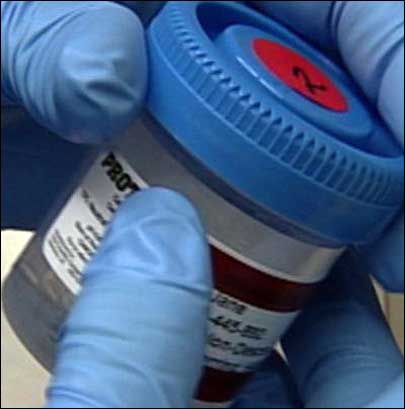
A study showed that after the organization’s endoscopy unit began using passive 13.56 MHz tags to identify specimen bottles, the rate of labeling errors dropped by 94 percent.
Pet product manufacturer Normerica has deployed RFID-embedded “smart boxes” and a mobile reader solution to meet Wal-Mart Canada’s RFID requirements.
Hewlett-Packard has removed more than 30 RFID readers and middleware to make its RFID system less intrusive and easier to deploy at other sites.
The US Department of Justice last week issued a letter to the RFID Consortium, indicating its approval for the organization’s intent to manage an industry patent pool that it hopes will facilitate licensing of intellectual property related to Gen2 RFID. The approval process clears the way for the Consortium to “open for business.”
Leading hospitals will explain how they are using RFID to cut costs and improve patient outcomes at the conference, to be held in January 2009 in Las Vegas.

The participants, which include ham-maker Parmacotto and supermarket operator Auchon, tracked tagged cases of food as they moved from production to sales floor.

Businesses can’t expect a handful of companies to do all of the work to develop industry standards for RFID.

Want consumers to accept the technology? Give them applications that make their lives easier.