
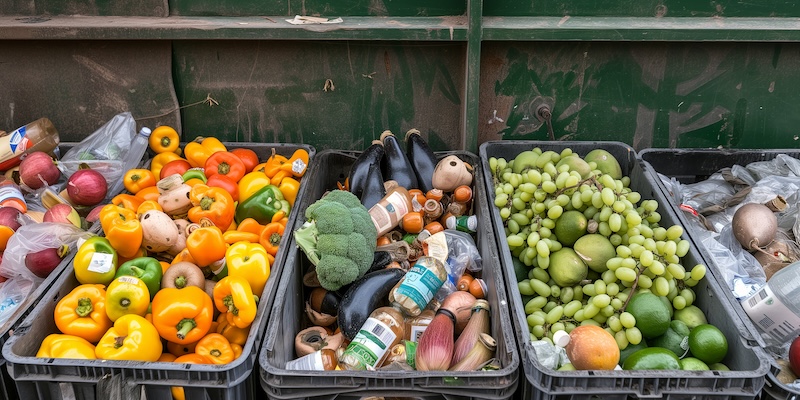
New data released by Avery Dennison reveals that two thirds of retailers still manage their food inventory using manual processes, findings that highlight how limited inventory accuracy and control are contributing to record levels of meat waste.
The visibility gap comes at a time when consumer demand is becoming harder to predict. According to research conducted for the RFID company’s Making the Invisible Visible report, 24% of retailers said that they are struggling to keep up with a growing appetite for meat, fueled in part by high-protein diet trends, which is limiting progress on food waste reduction. Meanwhile, 30% said shoppers’ reluctance to purchase meat close to its experation date is compounding the challenge.
Retailers recognize that manual counts are labor intensive and prone to inaccuracies, exacerbating forecasting challenges and increasing waste, with 79% seeing the value in investing in innovation to unlock savings. The report was published ahead of today’s UN International Day of Zero Waste
Avery Dennison Focus
The report from Avery Dennison comes on the heel of its Walmart partnership that delivers first-of-its-kind sensor technology that brings RFID-enabled labels to the meat department. By using RFID solutions in meat, along with bakery and the deli department, Walmart associates can track inventory faster and more accurately, making sure products stay stocked and ready when customers want them. With digital use-by dates right at their fingertips, associates can rotate products more efficiently and make smarter markdown decisions, helping cut down on unsold food.

“Modernizing inventory management is one of the most immediate levers retailers can pull to help reduce both financial losses and the environmental impact of food waste,” said Julie Vargas, vice president and general manager of Enterprise Intelligent Labels Growth, Avery Dennison, in a statement. “Consumer health trends like the boom in protein can put pressure on retailers to pivot assortments quickly, often without clear visibility of how long demand will last, resulting in over-ordering and preventable waste.”
Targeting Food Waste
The financial consequences of food waste are escalating as economic modeling predicts that meat waste will cost retailers $94 billion globally this year, rising to $103 billion annually by 2030. Economists found meat waste to be the most costly category in the grocery supply chain, ahead of produce (fresh fruit and vegetables) and bakery items at $88 billion and $67 billion, respectively.
Almost three-in-four industry leaders say managing meat-related waste is their single biggest operational challenge. This comes as retailers are working in an increasingly volatile economic environment, with 74% saying inflation is making it harder to forecast meat demand. This intensifies the risk of over-ordering, missed markdown opportunities and avoidable waste.
“By giving food items a digital footprint and supporting human decision-making with real-time item-level inventory intelligence, retailers can shift from reactive to proactive waste management,” said Vargas. “Businesses will find it easier to reclaim value that would otherwise be lost. Technology is able to turn uncertainty into actionable insight, enabling teams to anticipate demand, intervene earlier, and protect both margin and supply chain resilience.”
UN Goals
If current trends continue, economists found that the cumulative cost of food waste from 2025 to 2030 is expected to reach $3.4 trillion, coinciding with the 2030 deadline for the UN’s Sustainable Development Goal 12.3, which aims to halve global food waste. Despite this goal, the report uncovered that over a quarter (27%) of leaders said that they would not meet the 2030 deadline. One in 10 have put projects to halve food waste on hold altogether.
Amid growing volatility and higher consumer expectations, every inefficiency in the food supply chain— every wasted pallet, unsold shipment, or stockout— is felt more sharply than ever, noted Luna Atamian Hahn-Petersen, senior manager sustainability strategy, Accenture.
“In this environment, retailers are uniquely placed to orchestrate a system that unlocks value for all involved,” said Atamian. “We are sitting on a $540 billion opportunity to transform the grocery sector, and many of the answers already exist. By monitoring food products through every stage of the value chain, we can turn data into action and proactively prevent waste.”