
Key Takeaways
- Tadbik will manufacture durable, ruggedized Wiliot IoT Pixels built specifically for reusable assets like roll cages, pallets, plastic containers, and returnable transport items, letting enterprises monitor identity, location, movement, and conditions without batteries or manual scanning.
- The battery-free design supports more sustainable, circular logistics by removing the maintenance, waste, and replacement cycles tied to battery-powered tracking devices.
Tadbik Advanced Technologies has expanded its collaboration with Wiliot to manufacture IoT Pixels specifically for reusable supply chain asset— including roll cages, pallets, plastic containers, returnable transport items, and other logistics infrastructure.
Tadbik, the RFID and IoT division of Tadbik Group, has produced and delivered millions of Wiliot IoT Pixels for supply chain applications. Through this expanded collaboration, Tadbik will now manufacture durable, ruggedized IoT Pixels designed specifically for reusable supply chain assets, enabling enterprises to monitor asset identity, location, movement, and environmental conditions without batteries or manual scanning.
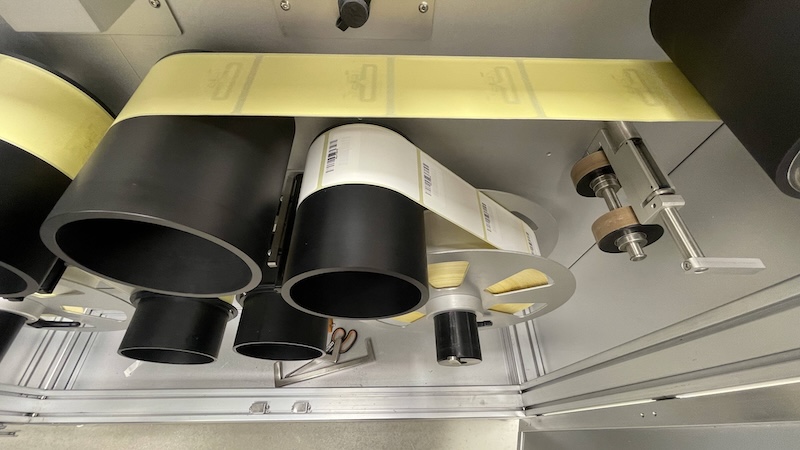
A key differentiator of the collaboration is Tadbik’s ability to integrate complex electronic components, including antenna structures, chips, and energy storage elements, into a single application-ready tag. Its flexible conversion process supports different tag sizes, formats, materials, and attachment approaches, enabling customers to tailor deployments while maintaining performance across high-volume production.
Wiliot’s Amir Khoshniyati on the Tadbik Partnership
The battery-free nature of Wiliot’s IoT Pixels supports more sustainable supply chain operations by eliminating the maintenance burden, waste, and replacement cycles associated with battery-powered tracking devices.

“Physical AI depends on reliable data from the real world, and that starts with tags that can perform in the environments where products and assets actually move,” said Amir Khoshniyati, Wiliot’s Vice President, in a statement. “Tadbik brings specialized expertise in engineering IoT Pixels beyond standard labels into durable, reusable formats for logistics and transport applications. That capability is important as enterprises scale asset visibility across facilities, fleets, and returnable asset networks.”
What the Tadbik and Wiliot Collaboration Produces
Reusable assets are critical to modern supply chains, but they are often difficult to track as they move through warehouses, distribution centers, trailers, backrooms, stores, and return loops. The Tadbik-produced IoT Pixels help close that visibility gap by giving operators real-time insight into the status, location, and condition of reusable assets across distributed networks.
Unlike standard label conversion, Tadbik’s work includes ruggedized, plastic-based tags and other durable constructions that can be adapted for specific asset types, attachment methods, operating environments, and deployment requirements.
Once deployed, Wiliot’s IoT Pixels transmit data that can help organizations understand the location, condition, dwell time, movement, temperature, humidity, and light exposure of products and assets across the supply chain. This data supports use cases including reusable asset tracking, shipment verification, inventory intelligence, condition monitoring, and workflow optimization.
Tadbik’s Yaron Luquer Comments
When combined with reusable assets, Wiliot’s IoT Pixels can help organizations improve asset utilization, reduce loss, support circular logistics models, and generate more actionable operational data from existing supply chain infrastructure.
Yaron Luquer, Tadbik Advanced Technologies’ Vice President of Business Development, noted the two companies have worked closely across multiple generations of IoT Pixels, and developed a strategic partnership around the engineering, testing, industrial-scale production, and conversion into customer-specific formats.
“Reusable logistics assets are handled repeatedly, exposed to different materials and conditions, and expected to perform over long service lives,” said Luquer. “Our engineering and conversion capabilities allow us to integrate Wiliot’s battery-free IoT Pixels into durable tag formats that can withstand those conditions while delivering consistent performance at scale.”