Asphalt Company Uses RFID to Manage Safety Equipment
Passive high-frequency RFID tags and readers track the inspections of eyewash stations, fire extinguishers and other pieces of equipment at its 16 plants.

Passive high-frequency RFID tags and readers track the inspections of eyewash stations, fire extinguishers and other pieces of equipment at its 16 plants.
Convergence Systems Limited (CSL) received a lot of attention last year when it introduced a handheld passive UHF reader with more than 30 feet of range, but as this installment of RFID Update’s series of company profiles shows, CSL’s past and future extend well beyond that product.
The U.S. Department of Defense aims to use RFID to eliminate waste, improve services and bolster security in its complex supply chain. The DOD’s successes so far have convinced allies and some defense contractors to follow suit.
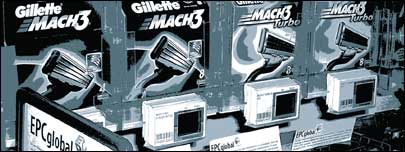
When Procter & Gamble told its third-party packagers to stop putting RFID tags encoded with Electronic Product Codes on promotional displays bound for Wal-Mart, it set off a wave of speculation among providers of radio frequency identification technologies, other Wal-Mart suppliers and journalists who cover the industry. Why did P&G do it, and what does it mean?

BLE promises to blur the line between Bluetooth and radio frequency identification.

RFID could be the food supply chain’s equivalent of the flight data recorder.

Innovative RFID applications can deliver more benefits and a faster ROI.

The eSpring system uses passive 125 kHz tags to track usage and determine when a unit’s carbon filter and UV lamp need to be replaced.
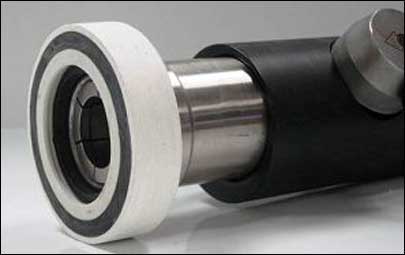
The system uses passive low-frequency tags and readers to verify that a vehicle’s fuel cylinders meet safety and inspection standards, thereby reducing the risk of explosion.