
Operationalizing IoT Data to Drive Revenue in the Enterprise
Digesting data and devising a way to collect, analyze and operationalize insights can result in profitability.

Digesting data and devising a way to collect, analyze and operationalize insights can result in profitability.
STMicroelectronics’ ST25TV chip can be read via ISO 15693-compliant readers, as well as NFC-enabled mobile phones, resulting in tags that can be used from the point of manufacture to consumer use with a limited footprint for small packaging.
National Institute on Aging awards People Power grant for caregiver study with UC Berkeley ••• ADLINK smart gateway selected for Michelin-SoftBank tire-control system ••• STMicroelectronics unveils solutions for cellular IoT connectivity ••• Smart city, smart energy, IoT companies partner to launch uCIFI Alliance ••• GlobalSign launches platform to address IoT device security.
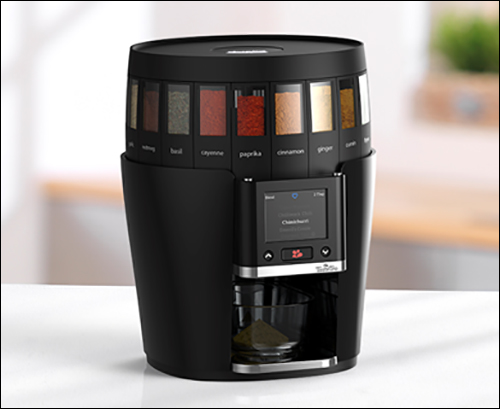
Startup TasteTro has developed a spice system that leverages an NFC RFID reader from RFID Canada, as well as and tags on spice pods, to mix, dispense and manage data about a user’s spice preferences.

iTag has partnered with Taiwanese company Printronix to provide RFID tags to be sewn onto garments made in Asia by brands sold in Brazil.
Some RFID solution providers don’t want to use the term “radio frequency identification” because it has gotten a bad rap, but that’s a self-limiting strategy.

Texas A&M researchers are testing technology from Sapien to capture the identities of ewes and their lambs in Australia, and to match the families together based on their activity.

As a growing number of consumers come to rely on the power of the Internet of Things, increasing pressure will mount on product makers to ensure that their products are reliable.
Wavelite has commercialized a system from Stanford University that employs a modified Wi-Fi transmission to send everything from temperature and humidity data to pictures to a phone, tablet or laptop.
Checkpoint Systems and Impinj Team to Create ARC-Qualified RFID Inlay ••• Smartrac Unveils New Belt Inlays Based on NXP’s UCODE 8 Chips.