
Pro Hackers Take On RFID Down Under
An Australian firm has begun using its information-security consultancy to perform RFID system audits, which include probing vulnerabilities.

An Australian firm has begun using its information-security consultancy to perform RFID system audits, which include probing vulnerabilities.
The CIO of the U.N. World Food Program will explain the challenges of managing a logistics organization that operates in 83 countries.
While UHF RFID technology will eventually see enormous volumes from the supply chain and retail environments, those volumes have yet to materialize. In the interim it appears that the oft-neglected high frequency (HF) RFID is an exciting source of growth and demand.

Workers at Lebkuchen Schmidt are using tagged mixing kettles to make sure each batch of baked goods has the correct ingredients, in the proper amounts.

Whenever we’re faced with an emerging, unproven technology such as RFID-enabled identification documents, there is a premature urge to create laws restricting or stopping it.

Companies from a wide variety of industries, including health care, apparel, children’s products and airlines, are embracing RFID technologies.
This is the final part of a three-part series that examines middleware and other RFID integration options and the issues surrounding them. This third installment questions whether RFID middleware has a place in a maturing RFID market and what role it might play.

The company hopes to encourage other RFID tag and reader makers to offer 433 MHz RFID hardware based on the ISO 18000-7 standard; the DOD will likely benefit.
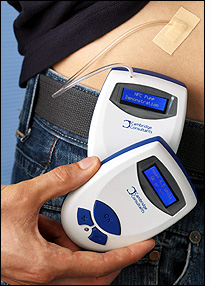
Cambridge Consultants and Philips Semiconductors have built a prototype system that uses near-field communications to link a glucometer and an insulin pump.
National Patient Safety Agency is seeking hospitals to participate in a 2007 trial, hoping to reduce the number of ABO-incompatible transfusions by 50 percent.