
RFID Education That Pays Off
The market is changing, and the education provided at RFID Journal’s events is changing with it.

The market is changing, and the education provided at RFID Journal’s events is changing with it.
RFID software framework provider OATSystems today announced its Asset Tracking and Work-in-Process Solution which is designed to handle two of the most popular RFID applications, work in process (WIP) tracking and supply chain visibility.
ASD Healthcare and Blue Vector announced RFID-based drug cabinets they developed have been installed in more than 50 hospitals. Active RFID tags are applied to individual drug doses so an in-cabinet reader can monitor inventory levels for automated replenishment. Other integrated sensors monitor storage conditions and issue alerts.

Return on investment is not the only way to calculate the value of RFID.

A test facility developed by GS1 Colombia has put Bogotá on the RFID map.
RF Code’s new Bluetooth-enabled mobile reader lets any Bluetooth device — including smart phones, handheld computers and notebooks — run active RFID applications. The reader also works without a computer and can store tag reads for later processing. The reader is being promoted for IT asset management and other applications.
The hospital group, having already deployed active RFID to monitor the whereabouts of movable assets, will use the technology to keep tabs on its patients.
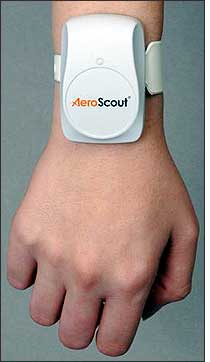
The health-care facility, located in Lagos de Moreno, Jalisco, is installing a Wi-Fi-based RFID system to track patients, staff and assets, as well as improve patient care.
Microsoft releases BizTalk Server 2006 R2; Container Centralen RFID-enabling its dollies; VDC foresees strong growth in handheld interrogator market; ODIN evaluates smart medical cabinets; RF Code debuts wearable, portable active RFID reader; Wavetrend, Tech Data sign distribution agreement.
The Korea Times reports that McDonald’s, the world’s largest fast food chain, and telecommunications technology manufacturer SK Telecom of South Korea have teamed on a pilot that allows consumers to order food from their tables using RFID. The system debuted today at a McDonald’s in western Seoul.