MBA Group Finds RFID Improves Shipment Accuracy
The distributor of medical supplies is tagging and tracking cartons of goods, enabling it to reduce order-preparation time and eliminate errors.

The distributor of medical supplies is tagging and tracking cartons of goods, enabling it to reduce order-preparation time and eliminate errors.

The second-annual RFID Journal Awards will serve to spotlight the best uses of RFID, as well as the best new product.
RFID chip and reader manufacturer Impinj a few weeks ago announced an upgrade to the firmware that runs atop its Speedway RFID reader line. Among a number of enhancements and added features, one in particular has reportedly roused the enthusiasm of Speedway end users: tag direction detection.
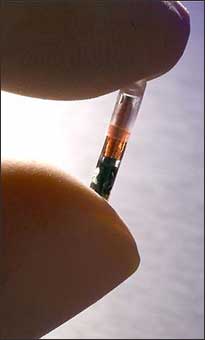
The system, which employs implantable tags to identify and track the remains of deceased individuals, is seeing gains in sales as states acquire it for disaster preparedness.
Once finalized, the new requirements could help drive the adoption of RFID in the medical supply chain and the reporting of adverse events.
The EB Identification Network consists of RFID interrogators, controllers and software to help companies more easily implement, tune and manage networks of RFID readers, thereby reducing interference and congestion.
GS1 UK, which represents RFID standards body EPCglobal in the United Kingdom, and technology services provider BT Auto-ID Services are seeking UK companies to participate in a pilot of the EPCIS RFID data sharing standard.

The sector is expected to be the dominant RFID market by 2017, when sales of RFID tags for food and livestock are slated to reach $2.66 billion.
VDC forecasts 25 percent smart card market growth; CipherLab debuts 9400 industrial mobile computer; Tego announces initial funding; TI, NXP announce new passport chips; SAP awards certificates to Datamax, Blue Vector.
Printable and thin-film batteries are emerging technologies that could replace watch-style “button” batteries and other traditional batteries used to power active and semi-active RFID tags, sensors, smart cards and other electronic devices. NanoMarkets predicts $4.6 billion worth of printable and thin-film batteries will power RFID tags by 2015.