
As 2025 draws to a close, we are about to step into 2026, a Year of the Horse full of promise and potential for success.
Over the past five years, we have been constrained by the pandemic and economic difficulties stemming from regional conflicts. Yet, we have witnessed tremendous technological advancements, particularly the dawn of the artificial intelligence (AI) era, which has brought us new dawn and hope.
 So, where is the way forward and the future for RFID tag antennas? As a main player and benchmark enterprise in the global RFID antenna industry, we at Grandtag believe the answer lies right beside us: continuous “Innovation” and “Cost Reduction,” coupled with developing the most environmentally friendly manufacturing processes and finished antenna products.
As we all know, the global consumption of RFID antennas reached 54 billion units in 2024, with etched antennas accounting for over 90% of this figure. While the etching process remains the mainstream technology, its environmental costs and the continuously rising cost of production materials have become unsustainable. Including our company, several leading enterprises have begun researching, developing, and adopting new process tag antennas, pursuing more eco-friendly and economical solutions.

Currently, there is still a significant gap between the twin goals of being more environmentally friendly and more economical, primarily due to the cost allocation challenges of new materials and processes. However, this is merely a matter of time. As demand increases, costs will gradually optimize and adjust. This process may be contentious and tortuous, undoubtedly requiring sustained investment and a more determined R&D strategy.
Grandtag and I represent precisely such a combination that dares to make long-term investments and embraces innovation. We operate a factory with an annual output capacity of over 10 billion various antennas. We develop and manufacture RFID bonding machine capable of handling the latest generation of chips such as the M830.
We boast a team of no less than 20 Masters, PhDs, and Post-Docs, dedicated to the advancement and refinement of new materials, new adhesives, new equipment, new processes, and the big data model research required for smart manufacturing. We are keenly aware of the technological products that the future of RFID will require. Therefore, our high-caliber team building and high-tech innovation never cease.
At Grandtag, our focus is on pushing the boundaries of what’s possible with RFID tag antennas. We are excited to share not only our recent R&D breakthroughs but our forward-looking roadmap. We see this as more than an update; it’s an open invitation to connect with visionary partners and kindred spirits across the globe. We are actively seeking ambitious RFID application projects and organizations who share our passion for innovation and want to build the future of this industry—together.
Since the spring of 2019, we have been laying the groundwork for the R&D of a new generation of non-etched antennas. Substantial and continuous investment and advancement in R&D truly began in 2023. The table below shows some of the data we can share, although the actual investment far exceeds these figures:
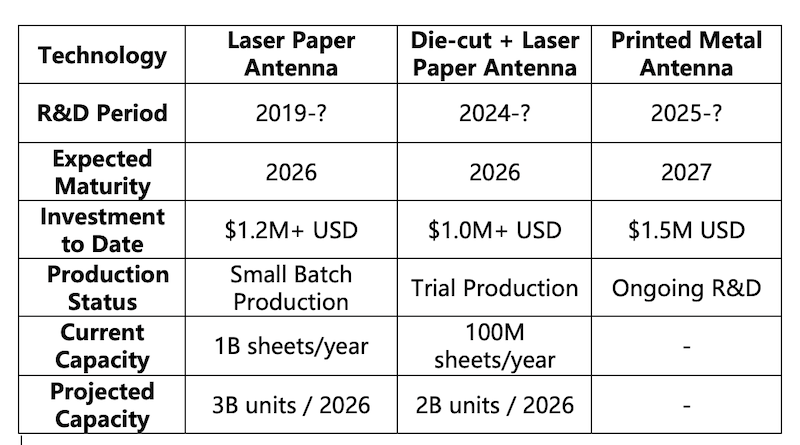
Starting in 2026, we will continue to vigorously advance the R&D of sustainable substrates and adhesive materials. Examples include plant-based fiber membrane materials represented by mycelium paper bases, water-soluble adhesives with zero organic gas emissions, low-temperature placement adhesives, and low-temperature bonding processes.
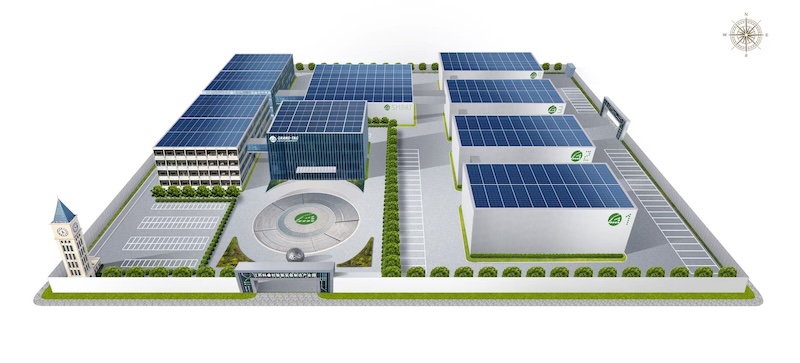
All development will be concentrated within Grandtag’s new campus— an industrial park that will host the R&D and manufacturing base we plan to construct from 2026 to 2028. Spanning 33,000 square meters, we aim to build it into a green manufacturing high-tech industrial park to boost the development of RFID.
Where is the RFID Tag Antenna’s future? It depends on you and me. We extend our invitation once again: let us jointly research sustainable, green, low-cost technological products and establish a cooperative relationship characterized by mutual assistance, mutual tolerance, and shared growth—a relationship that is far more than just a buyer-seller transaction.
Come On, Make it Happen Together!
Wishing everyone a happy and successful Year of the Horse!