by s9800078 | Oct 8, 2012 | News
Could the tag be encased in a normal bank card and work with the recommended reader? —Robin ——— Robin, The type of reader you would require would depend on the distance at which you wanted to interrogate the bank card. You could use a passive high-frequency (HF)...

by Admin | Oct 8, 2012 | Editor's Views
New tools will guide companies to the products and services they need, to help them deploy the technology successfully and achieve the most benefits.
by s9800078 | Oct 5, 2012 | News
If not, where might I find a comprehensive listing of companies that make chips for LF, HF, UHF and active RFID transponders? —Guillermo ——— Guillermo, There are many different types of RFID technology. I am unaware of any comprehensive list of firms that produce...
by Admin | Oct 5, 2012 | News
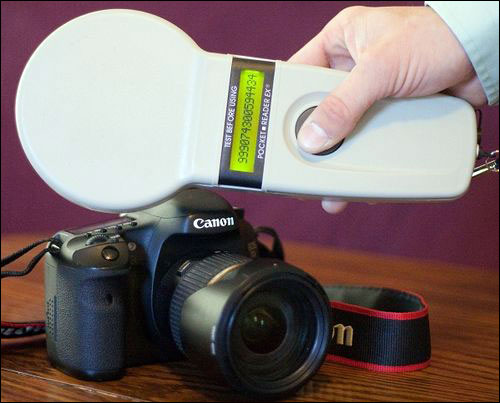
The company’s hosted server and microchips, based on animal-tracking technology, enable users to confirm ownership of items recovered by police or identified at a pawnshop.
by s9800078 | Oct 4, 2012 | News
Do any companies offer such a product—and, if so, where are they located? —Name withheld ——— The only company of which I am aware is Somark, which manufactures RF inks for animals (see RFID Tattoos to Make a Mark on Cattle Tagging). The permanent animal-identification...
by s9800078 | Oct 4, 2012 | News
VICS’ president and CEO is leaving the organization, but his leadership has helped to boost RFID’s adoption among retailers.
by Admin | Oct 4, 2012 | News
CNRFID, NRFLab collaborate to offer EPC-compliant UHF RFID tag tests; NFC technology supports Rock the Vote campaign; HID Global deploys Voyantic Tagsurance UHF tester for tag quality control; ADR Software to provide real-time workforce info for Baltimore and D.C. construction projects; Diamond Pet Foods adopts iGPS RFID-tagged plastic pallets; RFID Hotel acquired by Lodging Access Systems.
by Admin | Oct 4, 2012 | News
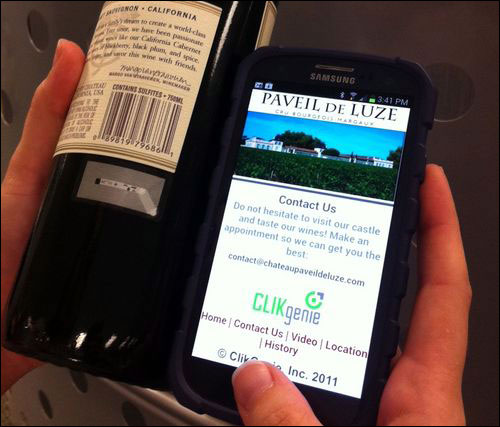
The company’s customers can place an order online for NFC labels encoded with IDs linked to a URL, or other content or services, such as verifying that product is genuine.
by s9800078 | Oct 3, 2012 | News
I plan to undertake a project in which an RFID system will be implemented in a car-door locking system. Is it possible to make duplicate cards, and can more than one card be used to operate the lock? —JP ——— Dear JP, The door’s reader can be programmed to open...
by Doug | Oct 3, 2012 | News
VICS’ president and CEO is leaving the organization, but his leadership has helped to boost RFID’s adoption among retailers.