Finalists Unveiled for 13th Annual RFID Journal Awards
RFID Journal has announced the finalists for its 2019 awards. The winners will be revealed at this year’s LIVE! event, being held in Phoenix, Ariz., on Apr. 2-4.

RFID Journal has announced the finalists for its 2019 awards. The winners will be revealed at this year’s LIVE! event, being held in Phoenix, Ariz., on Apr. 2-4.
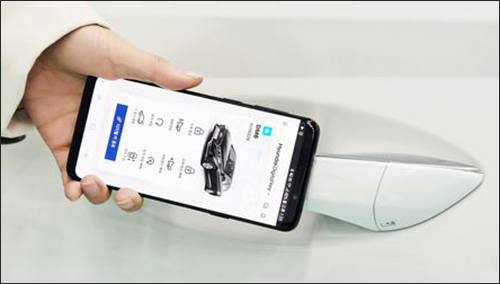
The company’s 2020 Sonata will be the first vehicle to come with NFC readers and BLE beacons built into its locking system and inner console, so that drivers can use a smartphone as a key to enter and start the car, as well as manage its settings.

The Bluetooth Special Interest Group’s new 5.1 standard comes with angle-of-arrival and angle-of-departure direction finding functionality, so that solutions can be built to locate the position of a tag or mobile phone within centimeters.

Association members are now reviewing the NFC Money Transfer Candidate Specification before it is released for use by financial service providers to enable NFC payments with phones at Chinese merchants.
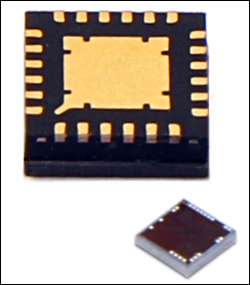
Asygn’s AS321X UHF RFID tag consists of the company’s own IC and sensors, with an instrumentation amplifier and an acquisition interface, to enable the sensors to seamlessly measure and forward data with the power of the RFID tag interrogation.

Authentication and social engagement are among the strongest business cases for wine and spirits brands to adopt smart labeling technology. How is Near Field Communication disrupting the way in which consumers interact with brands—and what can wine brands do to adopt the technology and use it to their advantage?

To help airlines figure out what they need to do to implement an RFID system and comply with IATA requirements, RFID Journal is offering a free seminar at this year’s LIVE! event.
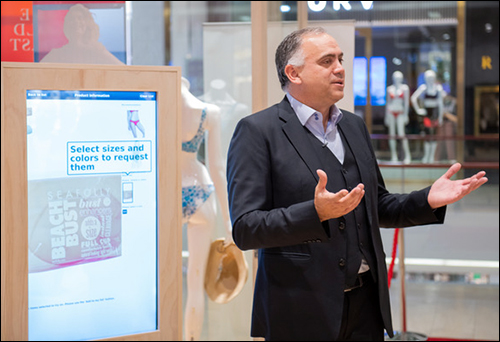
The Australian retailer has completed a pilot to improve inventory management with RFID technology, as well as increasing visibility in the supply chain, using readers and magic mirrors from Solos.

The most successful companies, both among RFID users and technology deployers, know how to investigate and discover changes in processes.
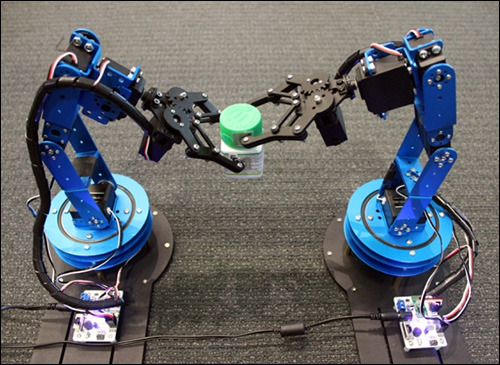
The TurboTrack system employs a standard tag and interrogator, as well as a “helper” antenna device that pulses short signals to pinpoint the locations of even fast-moving tags at the sub-centimeter level.