T3Ci Processes Billionth RFID Tag Read
The company says the milestone shows RFID adoption is growing.

The company says the milestone shows RFID adoption is growing.
IDC-owned research company Health Industry Insights has released a report analyzing the adoption of RFID item-level tagging by the pharmaceutical industry. Based on a survey of 143 life sciences companies, the report reveals a number of findings about one of the key markets for RFID adoption.

All members now use a card, bracelet or watch with a 13.56 passive RFID tag to access facilities and buy goods and services.
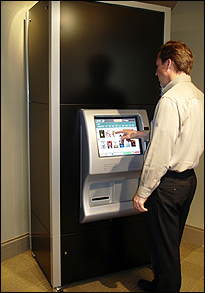
Self-serve kiosks employ passive 13.56 MHz tags to dispense and track the discs that customers rent and return.
Asset tracking is emerging as a breakout RFID application, but other mainstream application candidates are not clear, according to a briefing from industry research and analyst firm Frost & Sullivan. The company predicted 20 to 25 percent overall growth for RFID in the next two years, but said rates may very widely by technology type.
The company says it is responding to its customers’ interest in using HF tags for item-level tagging and product-authentication applications.

The hospital group will use active UWB tags to track patients’ locations in real time, and to document the status of their care.
A team at the University of Texas, Arlington, has designed and built a device that monitors the carbon dioxide a child exhales, and sends an alert via RFID seconds after the infant stops breathing.

The developers—IPICO, E.J Brooks and Tenacent—say their new seal, which includes tamper detection, is a simpler, low-cost alternative to active tags.
PINC Solutions, a provider of RFID yard management solutions based in Berkeley, California, has received $4.5 million in Series C funding. PINC’s flagship offering is Yard Hound, an asset visibility solution for distribution center yards based on passive RFID.