N.J. Medical Center Uses LF Tags to Protect Patient Records
Englewood Hospital requires staff to use RFID-enabled identity badges to access the institution’s computers and applications.

Englewood Hospital requires staff to use RFID-enabled identity badges to access the institution’s computers and applications.

Kovio says it expects to create printed-silicon high-frequency RFID chips by the end of 2008, paving the way for low-cost tags.
TAGSYS introduced a new 13.56 MHz high frequency RFID reader and related services based on the EPCglobal HF Gen2 draft specification. TAGSYS says the products can be easily upgraded to support the forthcoming standard, which is expected to be finalized in early 2008.
To help educate Canadian SMEs about how they can use RFID technologies to remain competitive, the provincial government is sponsoring a preconference seminar, “RFID Technology: Small Investment for Big Benefits,” at RFID Journal LIVE! Canada 2007.
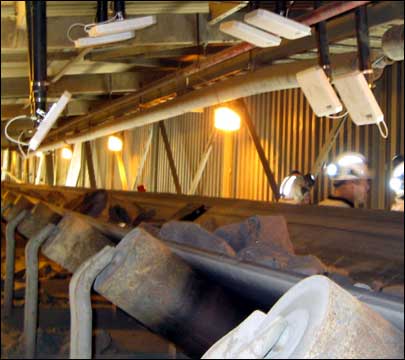
Ruggedized EPC Gen 2 tags are mixed with piles of ore that are crushed and dumped into railcars, so that mills can identify the ore’s grade.

More companies are embracing RFID as a technology that can deliver benefits today.
The head of EPC talks about the progress being made on standards and adoption in Europe.
Sirit has introduced a Reader Swap-out Program designed to give users an easy upgrade path and provide an incentive with a $250 instant rebate, lowering the cost entry point for adopting leading-edge technology. Further details on the Reader Swap-Out Program are highlighted in this sponsored column from Sirit.
The interrogator can read and encode Icode and ISO 15693 tags but will be upgradeable to work with tags complying with EPCglobal’s HF standard. Tagsys is also partnering with IBM to offer an HF start-up kit.
Thanks to handheld interrogators and in-ear tags, the 6,800-cow dairy can more quickly find and treat animals, update records and boost milk production.