
What’s In Your Supply Chain?
Recent reports suggest companies could face significant lawsuits because of an inability to know what their suppliers are doing.

Recent reports suggest companies could face significant lawsuits because of an inability to know what their suppliers are doing.
Nick on the Go is an optional service from Hertz that allows customers to rent media players pre-loaded with more than 40 hours of Nickelodeon programming. An active RFID system automatically tracks asset movements to help ensure there are enough units on hand at each Hertz location.
Patent-holder Ronald Bormaster has asked the judge to dismiss the case, but plans to appeal on the basis of patent interpretation. The defendants want the judge to rule now.
This week RFID hardware and solutions provider Sirit announced the acquisition of RSI ID Technologies, a vertically integrated manufacturer of RFID antennas, tags, and inlays. RSI will receive 10 million Sirit common shares initially, whose total value at the time of publication is approximately US$2.4 million.

Anglo American’s El Soldado mine uses RFID tags on front loaders, trucks and miners to ascertain who is in the mine, and to reduce the likelihood of vehicular collisions.
RFID promises to save millions of dollars for blood banks; IDTronic intros new HF gate antenna and long-range reader-writer; epcSolutions compliance package for DOD suppliers; Hill-Rom to add AeroScout RTLS to its medical product line; KSW Microtec passive windshield inlay offers more memory.

The acquisition is expected to complement and diversify Sirit’s existing product line, better serve its current markets and afford entry into new ones.
The Defense Logistics Agency (DLA), the US military’s distribution arm, is taking delivery of more than 1,800 smart label printer/encoders to help it apply passive UHF RFID labels to inventory and shipments. The printer/encoders will be installed at 21 worldwide Defense Distribution Centers, which already have RFID readers in place.
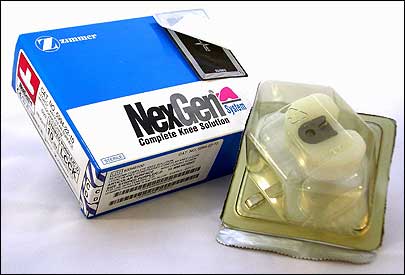
A growing number of hospitals and surgical suppliers are employing passive RFID tags to help them monitor the inventory and usage of implantable surgical devices, as well as to manage billing.
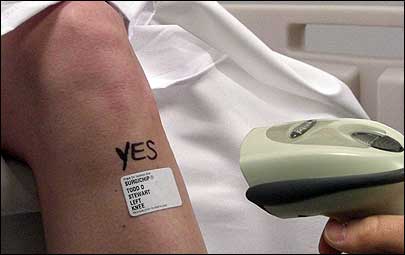
Designed to prevent surgical errors, the system now includes a larger wireless handheld device allowing health-care workers to exchange information in real time at the point of care.