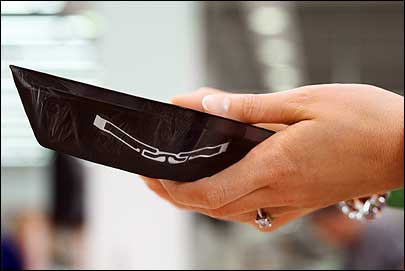
At Metro’s New Future Store, RFID Helps Assure Meat Quality
The company’s Real Future Store is using EPC Gen 2 tags to track individual packages of meat, ensuring its display cases are well stocked, and that no one buys expired products.

The company’s Real Future Store is using EPC Gen 2 tags to track individual packages of meat, ensuring its display cases are well stocked, and that no one buys expired products.
WiFi real-time locating system (RTLS) technology provider Ekahau announced its products can work on 2.4 GHz 802.11n draft-standard networks. Some wireless market analysts predict the 802.11n protocol will surpass Ethernet in enterprise network use. Ekahau is the first RTLS vendor to announce 802.11n support.
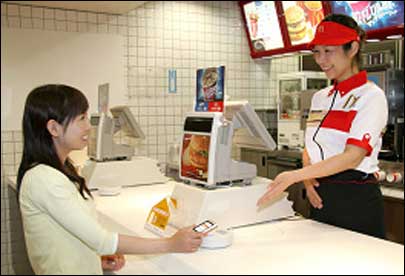
The company is sending coupons to consumers via their RFID-enabled mobile phones, which they can then use at its restaurants to receive discounts.
Although the main objective of its RFID system is to improve employee safety, the company also hopes to cut costs by better tracking tools between shifts.

A recent demonstration showed just how easy it is to use the Electronic Product Code Information Services standard to solve real supply chain business problems.

Based on numerous studies, the University of Arkansas’ RFID Research Center says companies can overcome the challenge of tagging products that include metal or water.

A new crop of RFID chips is designed to satisfy memory-hungry applications.
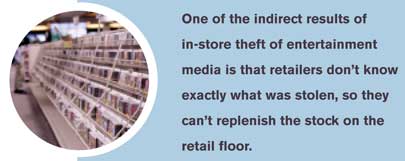
Players in the DVD, music and video game industry are looking to RFID to reduce out-of-stocks, improve promotions, and cut theft and counterfeiting.
The Lawrence Berkeley National Laboratory developed a smart first-aid storage cabinet that secures the supplies placed inside with a mechanical lock linked to an RFID reader.
Japan is instituting an RFID age-verification system to prevent underage kids from buying cigarettes at vending machines.