
Retailers See RFID’s Potential to Fight Shrinkage
Store operators are beginning to explore new applications for radio frequency identification, including using it as a tool for preventing product theft—or for reducing its impact.

Store operators are beginning to explore new applications for radio frequency identification, including using it as a tool for preventing product theft—or for reducing its impact.
At two sites in New York, the company plans to test the ability of item-tagging to help improve stock availability, productivity and customer service.
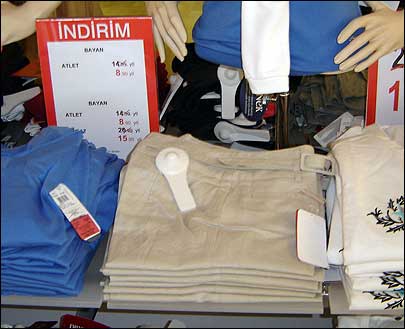
LC Waikiki plans to roll out the system—which combines EPC Gen 2 RFID and acousto-magnetic electronic article surveillance technology—at 50 stores within the next six months.
A CompTIA survey finds that 75 percent of IT companies say they will or might offer RFID products and services in the next three years—a drop of 14 percentage points.
Imation intros UHF RFID tape-tracking system; IDTronic unveils UHF interrogators in USB stick and Compact Flash forms; Arkansas public library implements RFID system; Michigan hospital uses RTLS to track patients; Alanco announces new $2.5 million financing.
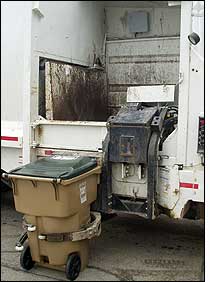
Three U.S. municipalities are using passive UHF tags to monitor whether their residents place recyclable bottles, cans and paper out at the curb.
RFID solutions provider Simply RFiD posted an entry on its blog a few weeks ago reporting the great read ranges on Gen2 technology that its engineers have found consistently in recent months. Those ranges were long enough to prompt skepticism from some readers — and to prompt RFID Update to interview the company president for more explanation.

The University of Parma facility is working with a number of clothing and accessory manufactures and retailers to stitch together the business benefits of RFID technology.
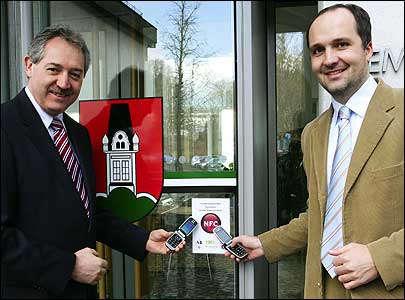
The Austrian lab has deployed posters embedded with RFID tags so passersby in the town of Hagenberg can use RFID-enabled mobile phones to download information about local tourist sites.
There will be $145 million worth of RTLS systems sold in 2008, and the market will top $1 billion within 10 years, according to a new research report from IDTechEx. Ultra wideband (UWB) is singled out as one of the fastest-growing RTLS technologies, although widespread growth for alternative technologies and application markets is expected as well.