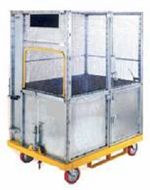
Swiss Post Delivers RFID to Its Parcel Centers, Transportation Hubs
The company is adding EPC Gen 2 tags to containers that shuttle mail and packages in and around nearly 50 facilities in Switzerland.

The company is adding EPC Gen 2 tags to containers that shuttle mail and packages in and around nearly 50 facilities in Switzerland.
SkyeTek is commercializing a managed service that uses smart cabinets and other unattended RFID readers to monitor inventory and notify field sales staff when customers require replenishment. Early users have reported rapid ROI from reduced out-of-stocks and time savings resulting from less inventory management time and paperwork.
Baird has released its August report. The 23-page document is a worthwhile read for anyone requiring an overview of the industry’s last 30 days. For those without time to do so, we have reprinted here the report’s summary.
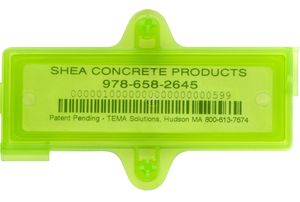
Companies like Phoenix Precast and E.F. Shea Concrete are using passive UHF tags to create an electronic quality-control trail and better manage their inventory.
International Coding Technologies announced TrackCon, a system for identifying and tracking pre-fabricated concrete products that features a plastic-encased passive RFID and bar code tag that is embedded during the production process. The developer says the system can be used for concrete products ranging from small tanks to pre-fabricated building walls.

The council estimates that once fully deployed and integrated with its employee ID system, the EPC Gen 2 RFID vehicle-tracking system will reduce labor by at least 40 staff hours per month, resulting in an annual financial savings of up to $40,000.
IDTechEx estimates that RFID spending on apparel will be $68 million this year, representing 38 percent of the total worldwide RFID spend for the retail sector. The research firm predicts that figure will rise to $988 million in 2013, an impressive 71 percent compound annual growth rate.

If retailers want their suppliers to absorb the cost of tagging at the source of manufacture, they need to share more information in return.

Store operators are beginning to explore new applications for radio frequency identification, including using it as a tool for preventing product theft—or for reducing its impact.
At two sites in New York, the company plans to test the ability of item-tagging to help improve stock availability, productivity and customer service.