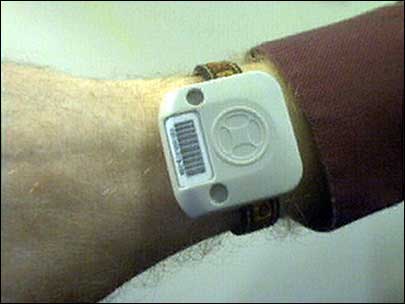
RFID Helps Diagnose Early Dementia
A system developed by researchers at the University of South Florida wanted to determine if an RFID-based system could be used as a diagnosis tool by tracking and analyzing a patient’s movements.

A system developed by researchers at the University of South Florida wanted to determine if an RFID-based system could be used as a diagnosis tool by tracking and analyzing a patient’s movements.
A new system features RTLS ID badges worn by retail store personnel so software can monitor their location, make recommendations on labor scheduling and deployment, and provide business intelligence about how employee locations impact sales and customers.
Three bills currently being reviewed by the state’s House of Representatives would require retailers to place warning labels on products containing RFID tags, and to obtain opt-in signatures from consumers issued RFID-enabled loyalty cards.

Ekahau’s system will enable the Ohio State University Medical Center to track assets, patients, employees and temperatures throughout its 40 buildings.
Market research firm VDC Research Group sharply reduced its RFID industry growth forecasts. VDC predicts worldwide RFID sales will grow 9.2 percent this year to $4.04 billion, after previously forecasting 30.5 percent growth. A rebound isn’t expected before 2011.
Research released today identifies the top 20 most recognized RFID companies, and the top 10 perceived to have the best technology and to be the best marketed, as identified by RFID users and providers worldwide. RFID marketing has lost some effectiveness since the previous study, but other sources of influence are growing.
The U.S. Department of Defense has authorized Savi Technology, Northrop Grumman, Unisys and SPEC to bid for orders to supply 433.92 MHz active RFID tags and readers, as well as related software and services.
RTLS solution provider Ekahau yesterday announced its award of a three-year preferred provider agreement with University HealthSystem Consortium, a group purchasing organization representing almost 300 academic medical centers and affiliated hospitals. The agreement signals RTLS’s move into the healthcare technology mainstream.
Adding RFID to its kanban cards used to track materials and production enabled German fittings manufacturer Hansgrohe to reduce data entry labor requirements by one hour per worker per day. The RFID process complements the company’s existing bar code and ERP systems.
The Mexican drugstore chain is using RFID tags, handheld readers and BlackBerry devices to keep tabs on all of its assets located in 700 stores and three warehouses.