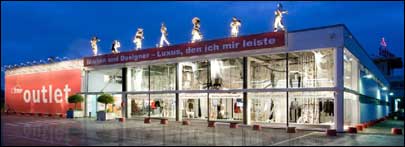
Krause Outlet Takes Window-Shopping to the Ultimate Level
The German retailer uses RFID to display information about each garment presented in its store windows, enabling a consumer to buy that exact item on the spot, via a vending machine.

The German retailer uses RFID to display information about each garment presented in its store windows, enabling a consumer to buy that exact item on the spot, via a vending machine.
Several recent contradictory developments and reports about item-level RFID use in retail illustrate that activity is not the same as progress. This report summarizes these developments and provides some context.
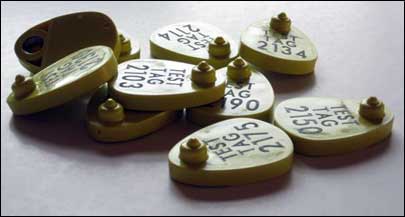
The company’s new r.Tag has a 100-foot read range, making it possible for a meat producer to not only identify hundreds of animals simultaneously, but also pinpoint their locations.
The company’s passive UHF TegoTag can be read by any standard EPC Gen 2 reader. Aircraft maker Airbus is testing a prototype.
Tagent successfully tested its first passive ultra-wideband real time location system (RTLS) chip and said it expects to release the technology late this summer. Tagent’s system uses peripheral power nodes to eliminate the need for a battery on the chip and to increase the coverage of reader networks.

The U.S. government missed its chance to use RFID to ensure accountability of the huge stimulus package currently making its way through Congress—but governments can still consider this option for future programs.

Although RFID won’t fix the mortgage problem, banks are investing in the technology to improve other business practices—a move they believe will pay off in dollars and sense.

A recession is the right time for RFID innovation.

A promising new business model for supply-chain deployments is emerging in Europe.

Physics can be used to improve RFID performance on hard-to-tag products.