
Now I Get to Learn About RFID
Every time I host an RFID Journal LIVE! event, I learn a few things about the technology that I didn’t know.

Every time I host an RFID Journal LIVE! event, I learn a few things about the technology that I didn’t know.

Industrial companies are conducting qualification testing of Primo1D’s passive UHF E-Thread technology, with integrated RFID-enabled threads, including electric cables, ropes, bale twine and tires.

Barriers to the adoption of radio frequency identification technologies are disappearing.

Permasteelisa North America is tracking its glass and steel panels as they are installed in new city buildings, while enabling a history of each panel, along with its warranty and maintenance records, so they can be easily accessed using a handheld reader.
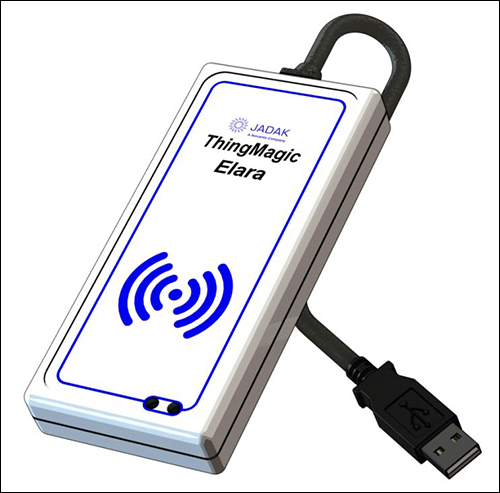
JADAK unveils plug-and-play RFID reader ••• Tanzania selects HID Global trusted-identity solutions for e-immigration program ••• Smartrac RFID products comply with Buy American Act ••• Berntsen International receives U.S. patent for UHF RFID utilities solution ••• GlobalPlatform, Trusted Platform Association collaborate on IoT ecosystem ••• L-SPARK, TELUS, BlackBerry, Solace launch Canadian IoT accelerator ••• FogHorn intros IoT edge-computing solution for mobile devices.

Impinj calls its new integrated circuit process its most significant innovation since the release of its Monza chip in 2005; the new IC will enable a smaller, faster and more effective series of RFID chips that could fuel major advancement in the UHF RAIN RFID industry.
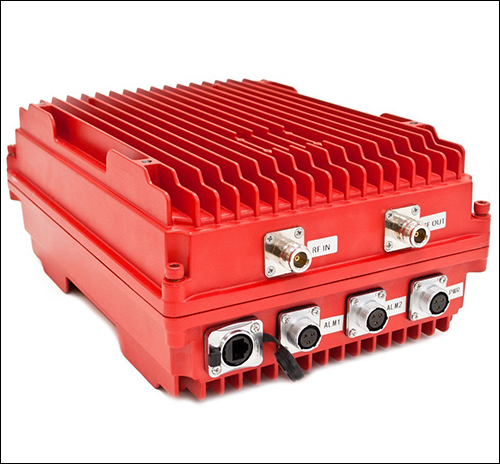
Comba Telecom’s CriticalPoint Antenna Monitoring System leverages RFID to ensure antennas can provide voice communications for public-safety systems used by first-responders.
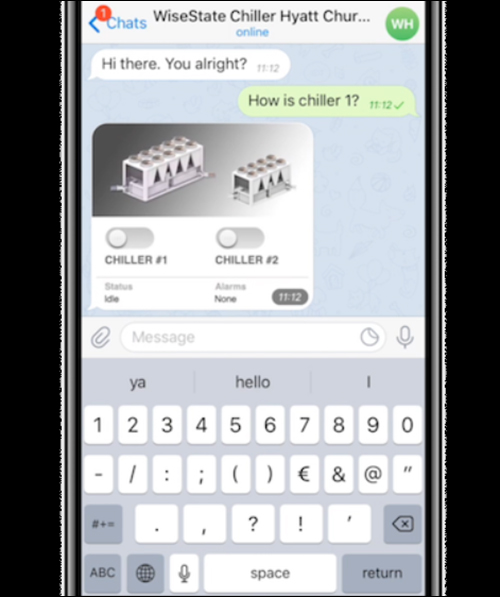
A new feature known as Talking Buildings, part of WiseState’s Bopstem solution, allows building managers to chat with their buildings about the operations of a chiller, water heater or generator, via WhatsApp or Telegram.
Here are a few tips for companies attending next week’s RFID Journal LIVE! event that can ensure your RFID project gets off to a good start.

The technologies work in parallel and in a complementary manner, lowering costs and increasing efficiency in controlling the value chain of products.