IMEC Announces Organic Rectifier for Tags
The Belgium research center claims its design for an organic rectifier diode has the potential to power high-frequency and ultra-high frequency passive RFID tags.

The Belgium research center claims its design for an organic rectifier diode has the potential to power high-frequency and ultra-high frequency passive RFID tags.
DHS testing tags for US-VISIT; PEAK releases device manager for SAP; Ofcom proposes RFID spectrum allocation; TI supplying Gen 2 inlays for Lowry Smart Trac; Infineon sells software business; new Xterprise headquarters includes solution center; WhereNet forms internal security group.
Last week RFID Update participated in a phone call discussion about the cold chain, which covered all aspects of the ways in which RFID is being used throughout the cold chain to improve old processes and expand into new ones.
Yesterday’s announcement that an intellectual property consortium is being formed for the “consolidated licensing” of RFID-related patents marks a major development for the industry and one that could significantly impact adoption of RFID technology.

It will take five or six months to set up the intellectual property consortium, evaluate patents and make them available to licensees.

An open house will mark the completion of the lab, which is being used by Wisconsin companies interested in RFID.
Last week RFID Update participated in a phone call discussion about the cold chain, which covered all aspects of the ways in which RFID is being used throughout the cold chain to improve old processes and expand into new ones.

The drugmaker is working with ADT Security Systems and OATSystems to develop an item-level RFID tagging system for its pharmaceuticals.
Some 20 providers of RFID technology have announced plans to create a patent pool, which could end confusion and contention over patent royalties.
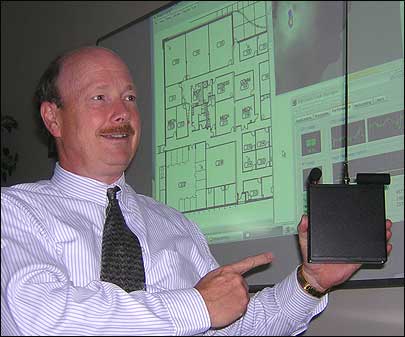
Q-Track claims its low-frequency real-time locating system is more precise and less expensive than existing systems.