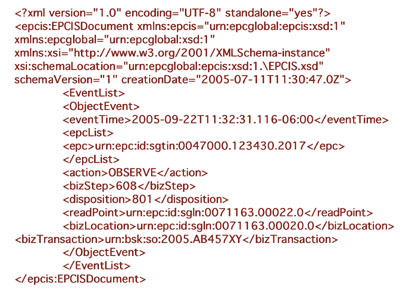
Target, Wal-Mart Share EPC Data
As part of a pilot, the two retailers are sharing Electronic Product Code data with 13 manufacturers in a standard format, paving the way for automatic data communications over the EPCglobal Network.

As part of a pilot, the two retailers are sharing Electronic Product Code data with 13 manufacturers in a standard format, paving the way for automatic data communications over the EPCglobal Network.
On Friday afternoon Wal-Mart released its first RFID-related announcement in months, and it was a good one. The retailer released the results of a University of Arkansas (UA) study which assessed the effect of its RFID deployment.

Sometimes the best-qualified RFID professionals are those not actively seeking a new career opportunity.

Expanding mandates, proof that RFID lowers out-of-stocks, lower tag prices and agreed-on formats for sharing data will all give RFID/EPC adoption a boost.

The retailer is working with its top 100 suppliers to get them to tag more products and deliver them to stores and distribution centers in additional regions.

A study by the University of Arkansas found the retailer was able to reduce out-of-stocks by 16 percent through the use of Electronic Product Code RFID tags on cases of goods from suppliers.

The company is developing an e-seal system that will enable shipping companies to monitor cargo security electronically.
Twenty-five branches of the city’s public library are being outfitted with a system to expedite the tracking and borrowing of books.
Major Australasian retailer testing RFID; Axalto supplies RFID cards for Key debit program; ScanSource announces new RFID bundle; Cisco embedding PanGo software in health-care product platform; Paragon providing Paxar 9855.
In this guest article from Yankee Group, analyst Marcus Torchia surveys the current vendor space of 802.11 based active RFID real-time location systems (RTLS).