Wal-Mart Seeks UHF for Item-Level
During a recent webinar, the retailer’s RFID solutions architect explained his company’s criteria for successful item-level tagging.

During a recent webinar, the retailer’s RFID solutions architect explained his company’s criteria for successful item-level tagging.
Ubisense, a maker of high-precision real-time location system (RTLS) solutions, yesterday announced $3 million in funding. The investment marks the first round of private equity for the Cambridge, England-based company. RFID Update spoke with CEO Richard Green about Ubisense and its position in the market.
In tests performed by ODIN Technologies, HF tags outperformed UHF tags for use on pharmaceuticals at the item level.
Technology vendors gave demonstrations so EPCglobal could observe the performance of item-level tags and readers operating at different frequencies in seven different use case scenarios.
ODIN technologies today will release a new benchmark that could be considered the end of round one in the ongoing debate between high frequency (HF) and ultrahigh frequency (UHF) RFID technology. The winner: HF. “By technical knockout,” said Patrick Sweeney, ODIN’s president and CEO.
Within the next 12 months, the country expects to dispense more than 3.5 million electronic passports containing RFID chips.

A Roman university’s RFID lab is opening its doors to companies looking to research potential RFID applications for their operations.
ABI Research of Oyster Bay, New York, has released a new study regarding adoption and growth of RFID technology in South Korea. ABI’s central prediction is that, after coming from behind, South Korea’s RFID adoption is an increasingly fast-moving target.
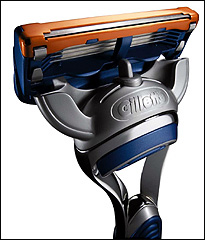
Gillette’s first EPC-enabled product launch of its Fusion razor proved RFID is a powerful tool for monitoring retailers’ actions.
Bill Hardgrave, director of the University of Arkansas RFID Research Center, will unveil more results of a study into how EPC technology is reducing out-of-stocks at Wal-Mart.