
Observations from NRF’s Big Show, Part 1
The event showed how RFID technology providers are moving toward building more complete solutions.

The event showed how RFID technology providers are moving toward building more complete solutions.

Radio frequency identification offers the only feasible commercial approach to reducing the plague of gun violence in the United States.

The study, undertaken during the past 15 months, found that the retailer not only improved its on-shelf and display compliance, but made single-unit sales possible when a store’s inventory may be down to its last unit for a particular SKU.
Libelium’s case study about the iWesla Internet of Things-based project is available to download from RFID Journal’s white paper library.
The uTrust Sense Temperature Tracker is a low-cost, portable, powered smart sensor that tracks and stores temperature readings.
Mobile browser for Internet of Things launches at art gallery exhibit ••• IDC report on IoT analytics and information-management technology provides guidance for senior executives ••• Honeywell, Aereon to leverage Industrial IoT for oil and gas ••• Digi International acquires SMART Temps ••• Enfucell SoftBattery powers Identiv’s smart temperature sensor solution for IoT ••• Transcends releases RIFIDI 3.6 for IoT; PMRS deploys RIFIDI Edge Server for tag detection.
New capabilities include the SmartMesh VManager networking software and Blink mode.
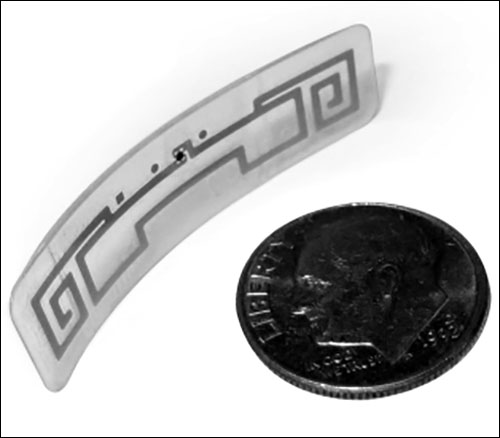
Fujitsu unveils new UHF RFID tag for fashion apparel, accessories ••• Transcends releases RIFIDI 3.6 for IoT; PMRS deploys RIFIDI Edge Server for tag detection ••• Tyco Retail Solutions adds Zebra Technologies products to its portfolio ••• Checkpoint Systems offers RFID label for merchandise visibility, including retail cosmetics ••• Nedap expands long-range ID portfolio, intros new heavy-duty UHF tag ••• Identec Ltd. adds mid-range reader to its Cyphertag product line.
The report should signal to Congress the need for a national strategy.
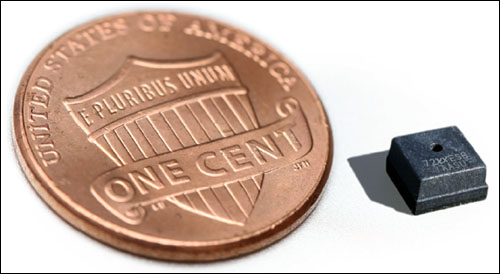
Ams has released a light and near-IR sensor-on-chip that enables companies to build light-sensing products that can be used as mobile devices, or be built into a permanent sensing network; the two SoCs are expected, in some cases, to be used with RFID to link the identity of a product or location with a sensor reading.