Port of Oakland Sees Signs of Security in RFID
The port’s goals for its 2.4 GHz active-tag system also include shortening truck waits at the gate and increasing the visibility of traffic.

The port’s goals for its 2.4 GHz active-tag system also include shortening truck waits at the gate and increasing the visibility of traffic.
The new online system enables the more than 3,000 attendees and exhibitors participating in RFID Journal’s fifth annual conference and exhibition to meet online, arrange meetings and achieve event goals.

In this Viewpoint from AIM Global, Editor Bert Moore discusses the supposed “victory” privacy advocates achieved when the U.S. Department of Homeland Security opted to use bar codes instead of RFID on driver’s licenses.
Fabless semiconductor startup Starport Systems last week announced the SP7001, a Gen2 RFID reader chip whose reduced price and small form factor the company hopes will enable the incorporation of RFID into far more devices than is possible today, eventually resulting in the emergence of a new class of RFID applications.
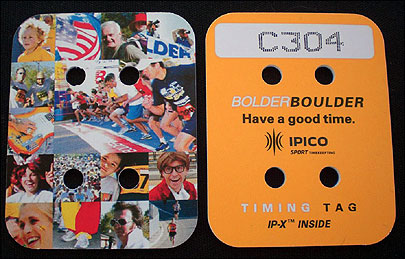
Starting with the 48,000-runner BolderBoulder race, IPICO Sports plans to deploy more than 400,000 passive tags and 500 readers over the next two years.

RFID Journal’s fifth annual conference and exhibition, to be held April 30 to May 2, 2007, will feature a keynote address by Ravi Kalakota, vice president and managing partner at Unisys.

RFID system replaces bar codes to track whether Thalia’s stores have returned the company’s book bins.
In reaction to recent high-profile articles in the mainstream business press that offered pessimistic slants on RFID adoption in the retail supply chain, ABI Research today released a statement asserting that the long-term retail supply chain opportunity for passive UHF RFID does in fact exist.

Though satisfied with the results of a pilot involving tagged items and cases, Teva Hungary is holding off deployment until political and privacy concerns are resolved.