Feb 01, 2008Chief information officers are the most powerful people in the RFID universe. It's often CIOs who green-light RFID initiatives involving multiple business partners—and pull the switch on global RFID projects that failed to meet expectations. CIOs also sit on RFID standards committees, identify promising technologies, work with vendors to fine-tune product and service features, and educate CEOs and other top-level executives in their companies on RFID's business potential.
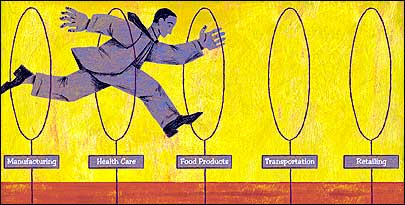
Given the massive impact they have on the RFID industry, it's not surprising that most CIOs have strong opinions on the technology, including its current uses and misuses, and future prospects. For a CIO's view of RFID in 2008, RFID Journal asked five CIOs working in five key fields—manufacturing, health care, food products, transportation and retailing—to reflect on their current relationship with the technology, the lessons they've learned, and where they believe things are headed.
|
|
Getting Dow to Business
David Kepler, CIO of Dow Chemical in Midland, Mich., is a strong believer in RFID. "RFID aligns to the corporate strategy," he says, "and brings multiple benefits to the company."
In 2006, Dow launched a multigenerational supply-chain program aimed at pulling together sensor networks, global positioning systems and auto-identification technologies to improve the way the company tracks materials, both in transit and in warehouses. "Collaboration across the supply chain is required for the long-term success of everyone," Kepler says. "The establishment of the chemical industry vertical in EPCglobal and building out use cases across the industry is an essential first step. Dow's intent is to be a leader in leveraging technology for value; we are not doing this for the sake of new technology."
Dow will only launch RFID projects that have the right combination of tangible value, strategic alignment and feasibility. "We use a front-end loading waterfall methodology, and we start projects but have stage/gate reviews to ensure success," Kepler says. "We also recognize that there is risk with the emerging nature of these technologies, and we adjust our management of each project based on risk mitigation."
At Dow, RFID is already creating positive bottom-line results. "RFID has generated a 50-percent improvement in response time to identify and resolve in-transit problems, as well as a 20-percent reduction in excess product and safety stock inventory," Kepler says. Other benefits attributable to the technology include a 20-percent container fleet reduction and an improvement of up to 90 percent in the reliability of delivery-time windows, plus the elimination or early detection of product theft.
Kepler believes that standards, technology maturity and innovation will combine to drive widespread RFID adoption. "Once you have adoption for one purpose," he says, "the second set is usually cheaper from a value perspective."
John Halamka, CIO of Harvard Medical School and Beth Israel Deaconess Medical Center, both located in Boston, believes strongly in RFID—so much so that he made headlines back in 2005, when he became the first physician to have an RFID chip implanted into his body. "I have an implanted RFID [device]," he says, "which contains all my medical records and my fully sequenced genome."
Today, with a chip in his arm—but not on his shoulder—Halamka holds definite views on the current state of RFID as well as its future. He's particularly bullish on the technology's potential as a patient identification application. "RFID tags have several advantages over bar codes," he says. "They do not require line-of-sight reading, hence an RFID reader can be brought near a sleeping patient or a swaddled NICU [neonatal intensive care unit] baby." He notes that RFID tags are also highly resistant to moisture, crushing and tearing, environments and situations that commonly occur in a hospital setting.
|
|
Yet Halamka remains cautious about using the most common type of RFID technology with patients. "Passive RFID is not a panacea," he says. "Tags are more expensive than simple printed bar codes, and standards for passive RFID are still in evolution." Halamka also feels that more work needs to be done to make RFID reliable enough for use with patients in hospitals and other medical facilities. "RFID tags typically have up to a 20-percent failure rate in manufacture," he says, "and thus can result in a nonreadable wristband."
On the other hand, Halamka sees a bright future for active RFID technologies in tracking expensive medical equipment, patient beds and staff, noting it's important to consider privacy and respect issues when monitoring employees. "In the emergency department, it has reduced the time to search for ventilators, IV pumps and EKG devices to near zero," he says. "For tracking staff, we specifically worked with managers to ensure that tags would not be used in a punitive way, such as to record minutes in the lunchroom, trips outside to smoke, etc."
Halamka says a combination of bar codes and passive and active RFID technologies is working well in his various pilots. "No one technology meets the needs of all use cases," he says. "Although we favor bar codes over passive RFID in the short term, we do expect to eventually replace bar codes with RFID once the technology is more robust, standardized and cost-effective."
RFID is rolling along at rail giant Norfolk Southern, which transports freight over a network of more than 21,000 route miles in 22 states in the eastern United States. The company counts on RFID to help it streamline the management of its rolling stock and cargo, as well as to provide capital asset and supply-chain insight, says Deb Butler, the Norfolk, Va.-based company's CIO.
Norfolk Southern uses RFID for Automatic Equipment Identification (AEI). In the mid-1980s, the Association of American Railroads (AAR) launched an effort to equip all North American railroad locomotives with RFID tags. The outfitting of all Norfolk Southern railcars with RFID tags soon followed. "These tags store data about the car, locomotive or end-of-train device it's attached to," Butler says.
|
|
Trackside RFID scanners are situated at strategic locations, including inbound and outbound routes at yards, some yard tracks, interchange points and some customer locations. "When equipment moves by these scanners, the collected data is forwarded to various systems within Norfolk Southern," Butler says. "Some examples of RFID data usage are asset tracking, shipment tracking, consist verification, train movement reporting, and triggering various billing processes."
RFID projects are green-lighted at Norfolk Southern for the same reasons the company would approve any project, Butler says: "Reasons for green-lighting include improvement in our operational safety, a positive return on the investment, and an industry initiative that we need to participate in due to our tight integration with peers in the railroad industry."
Canceling an RFID initiative would be at least an equally difficult and complex decision. "We need to move cautiously to ensure that safety and operational efficiency are maintained while moving in lockstep with our railroad industry partners and customers," Butler says. "We also need to ensure that we maintain compliance with any regulatory requirements."
At Norfolk Southern, responsibility for RFID technology is shared among three departments. "Our communications and signals department handles the installation and maintenance of the trackside antennas and communications equipment," Butler says. "The mechanical department does the installation and maintenance of tags on the rail equipment, and the information technology department handles the data management."
Two of the major benefits RFID delivers to Norfolk Southern are improved data quality and timelier reporting. "The AEI feeds reduce the amount of manual keying, which reduces the opportunities for errors," Butler says. "Based on the AEI scans, some of our trains are automatically reported in or out of a location within our IT systems. This occurs more quickly than a manual process." Butler also appreciates the better inventory visibility RFID supplies: "There is a reduced chance of missing cars. If the car is moving in the rail network, we will know it based on AEI scans, and know where it was last scanned." She adds that inventory tracking is also much less manually intensive, thanks to the AEI scan information.
Down the road, Butler would like to be able to use an affordable RFID solution for the management of intermodal equipment, such as containers and chassis. "But this would be an industry effort," she says, "not just a Norfolk Southern project."
Even further in the future, Butler is looking forward to the arrival of smaller, cheaper and easier-to-use tags. "There is research currently being done on next-generation RFID tags, often called motes, that we are not working on but following closely," she says. Motes, also known as "smart dust," are tiny tags as small as grains of sand. Besides tracking the location of Norfolk Southern's railroad equipment, such technology would enable managers to monitor temperature, humidity and other environmental factors, helping them to reduce incidents of spoilage and returned shipments. "The new technology would allow mesh networking," Butler says, "and would significantly extend the capabilities of what we do now."
Food giant Sara Lee has more than three years of experience with RFID, thanks mostly to prodding by Wal-Mart, one of its major customers. In fact, the only Sara Lee customer currently receiving RFID-enabled shipments is Wal-Mart, says George Chappelle, CIO of the Downers Grove, Ill.-based company. "We have, from time to time, had requests from other customers asking us to look into it," he says. "But for a variety of reasons—not our reasons, but customers' reasons—they've decided not to pursue it."
The decision on whether to green-light future RFID initiatives will depend on the customer and the project's requirements, Chappelle says. "In general, we will attempt to satisfy any customer requests for RFID."
|
|
While Sara Lee wasn't initially thrilled with the idea of adopting RFID, Chappelle says the Wal-Mart project has actually helped both parties improve business operations. "Wal-Mart uses the information to deploy product to their stores," he says. "We, in turn, have learned more about how quickly our product actually gets to a store, through the Wal-Mart supply chain, and how quickly it may not." The result is greater insight and streamlined services. "We're also learning more about RFID," Chappelle says, "the techniques for tagging, how the tags perform, which vendors have better tags and better tagging equipment."
Sara Lee is also testing RFID for internal use with a small pilot project involving a single food production process segment to automate meat cooking. "We're using the technology as a component within an overall manufacturing execution system," Chappelle says. "The meat product is automatically moved on trays to ovens for cooking; RFID is used to monitor and move the trays."
RFID design and deployment is a team effort at Sara Lee. "It's a shared responsibility between myself and our supply-chain organization," Chappelle says. "I have a portion of the responsibility in terms of the technology and what's deployed, but our supply-chain people also have a responsibility in terms of the process they use to do the tagging."
Chappelle believes that RFID is destined to play an increasingly crucial role in the supply chain and manufacturing. "I don't think there's any doubt that RFID will move into new areas and, eventually, from a consumer products standpoint, take over the supply chain," he says. "It's a question of when, not if."
Metro Group is one of the world's largest retailers. Based in Düsseldorf, Germany, the company operates some 2,400 wholesale stores, supermarkets, hypermarkets and department stores, as well as Media Markt and Saturn consumer electronics outlets. Nearly two-thirds of Metro Group's stores are in Germany, but the company also has shops in 30 other countries in Europe, Africa and Asia.
Gerd Wolfram is managing director for advanced technologies at MGI Metro Group Information Technology, the IT service provider for all Metro businesses. Wolfram's role at Metro Group is that of a technology strategist. His organization handles systems development and consulting, computer center operation, provisioning of network services, IT purchases, and groupwide coordination of IT strategy. "We also want to contribute to the further development and modernization of the retail sector," he says, "both at the national and at the international level."
Metro started introducing RFID along its entire supply chain in November 2004, the first retail group in Germany to do so. Wolfram says the company's objective was the optimization of logistics and warehouse management processes. In October 2007, Metro completed the rollout of RFID portals that can register and track goods arriving at all of its Metro Cash & Carry wholesale stores in Germany, as well as at its German distribution centers and its 100-plus Real-brand hypermarkets. Encompassing about 180 locations, the initiative marked the largest operational RFID deployment in the European retail sector.
"We have been able to verify the claims that RFID increases the visibility of the goods flow in IT systems," Wolfram says, "thereby enabling higher efficiencies along the entire supply chain." RFID also helps accelerate previously manual processes, such as registering incoming goods at warehouses and outlets, and managing and reducing inventory levels. "The result," Wolfram says, "is a reduction of costs."
Now, Metro is taking RFID to the next level: At its Galeria Kaufhof department store in Essen, Germany, the company has introduced an item-level RFID trial, based on EPCglobal standards, designed to offer benefits to customers, employees and management. The trial is tagging and tracking 30,000 items in the men's fashion department, from the distribution center to the point of sale. More than 60 RFID readers, installed in the incoming-goods area, at all doors between the back and the front of the store, in dressing rooms and at cash registers, enable employees to know at all times where each piece of merchandise is on the sales floor. In addition, smart dressing rooms use RFID to display information about clothing items and the availability of items in different colors or sizes, and to recommend complementary products and combinations. "We are not only realizing the potential of RFID in supply chains," Wolfram says, "but are also demonstrating its key benefits to customers."
Wolfram believes that broad-scale deployment of RFID on the item level will be a key step in the technology's maturity. "We already see the value for higher-priced goods," he says. As the number of products using RFID on the item level expands, Wolfram predicts the arrival of a number of new and innovative services. "Think of the checkout of the future," he says. "In 10 to 15 years, you will push the shopping cart through an RFID-enabled point of sale, and the bill will be calculated automatically within a second; queues will be a thing of the past."
Wolfram says Metro's various deployments and trials have shown that RFID can provide the company with an entirely new perspective on its processes and operational setups. "Implementing an RFID project into an established workflow is almost like an exciting exploration," he says. "RFID provides you with an instant taste of what an IT-based real-time process chain can do for your business."
RFID also has the potential to become an important cross-industry enabling technology. "RFID will be key to the integration of the physical world with increasingly capable IT systems," Wolfram says.
Wolfram believes that innovative technologies have been vital in advancing Metro's business, at home as well as internationally. "Early on, we recognized the potential of RFID as an enabling technology that will bring benefits in processes and customer services," he says. "Keeping this in mind, we opted for an early-adopter strategy to assess how the technology can help us to streamline retailing processes, boost transparency in our supply chain and cut costs." As the years unfold, Wolfram expects RFID to continue to help Metro, and the entire retail industry, to grow and prosper. "Based on the experience gathered since 2004, when we started," he says, "we are convinced that RFID has the potential to revolutionize the retail sector."
What role does your CEO play in RFID strategy development?
David Kepler, Dow Chemical: "Our CEO [Andrew N. Liveris] has set a strategy that includes a strong focus on sustainability and low cost to serve. We frame RFID in the context of an overall IT strategy that is aligned to the company's strategy. It aligns directly to defect-free service, sustainability, and a safe and secure supply chain."
John Halamka, Harvard Medical School and Beth Israel Deaconess Medical Center: "I meet with him [Paul Levy] every month to update him on our successes, challenges and progress. Sometimes he pilots new technology for me."
Deb Butler, Norfolk Southern: "Although RFID projects are typically progressed by the business owners through the normal capital budgeting process, the CEO [Charles W. (Wick) Moorman IV] and board of directors ultimately approve the annual capital budget. For the most part, we're not talking to [Moorman] about the subject of RFID. Instead, we focus on the business initiative. Depending on the initiative and the role of RFID within it, conversation will naturally include a discussion of that technology—especially since he has experience from the technology side as well as from the perspective of several departments that use RFID technology."
George Chappelle, Sara Lee: "CEO Brenda C. Barnes is aware of what we're doing with customers. It's a normal part of what she gets involved in when she reviews general business performance or customer-specific initiatives."
Active Mode
Are you active in the development of RFID standards?
David Kepler, Dow Chemical: "Dow joined the U.S. branch of RFID standards group EPCglobal in 2005. Being active in standards groups allows us to do a couple of things: First, standards are important so that vendors can create solutions that meet a wide market and can therefore offer the solutions at a low cost. Second, we are a collaborative company, and playing leadership roles in standards organizations allows us to demonstrate that collaboration spirit. Finally, standards and the products based on them are iterative, so by participating, we get our needs met earlier."
John Halamka, Harvard Medical School and Beth Israel Deaconess Medical Center: "One of my other jobs is that I oversee all health-care standards for the country as chair of the national Healthcare Information Technology Standards Panel."
Deb Butler, Norfolk Southern: "From an industry integration perspective, we find it imperative to be a part of the standards body. The railroad industry is extremely interdependent; it is unproductive to have unilateral technology development for components that will be interchanged with other railroads thousands of times a day."
George Chappelle, Sara Lee: "For us, there is little benefit to sitting on standards committees. We, of course, want global standards, but we are not very concerned about which ones are chosen—just that they are universally adopted by all of our customers and suppliers."
Gerd Wolfram, Metro Group: "We strongly believe that user-driven standards are a superior way of developing applications for a technology like RFID. The benefits of introducing our own user requirements into the standardization work of EPCglobal lie in the subsequent deployability of hardware and software based on these standards. Our latest item-level trial in Essen, Germany, is a case in point, because as the first company worldwide, we have been able to deploy the complete stack of EPCglobal standards for our DC-to-POS item-level pilot.
"I think it is vitally important that all early adopters introduce their knowledge into the ongoing standardization efforts, and that we share best practices in order to encourage users—especially SMEs [small and medium-size enterprises]—to explore the potential of RFID for their processes."
Vendor Handshaking
How important is cooperation and close interaction with vendors to the success of your RFID initiative?
David Kepler, Dow Chemical: "When you work with several vendors, you need to smooth terminology and expectations, and ensure clarity on roles. We have significant experience delivering capabilities that depend on multiple vendors, and smoothing those interchanges for value, speed and sustainability."
John Halamka, Harvard Medical School and Beth Israel Deaconess Medical Center: "All our projects are fine-tuned via pilots, collaboration with vendors, and continuous incremental improvement."
Deb Butler, Norfolk Southern: "At times, it is possible for us to purchase off-the-shelf technology and to integrate it without vendor assistance. Equally common, however, is for us to work very tightly with one or more vendors to tailor the solution to our needs."
Gerd Wolfram, Metro Group: "Among the 70-plus partners we have to date in the Metro Group Future Store Initiative, many are technology firms with whom we collaborate very closely in order to introduce our requirements directly into R&D efforts. Since our projects are based upon open standards, both parties gain from the resulting collaborative learning experience."
Illustrations by Ken Orvidas